
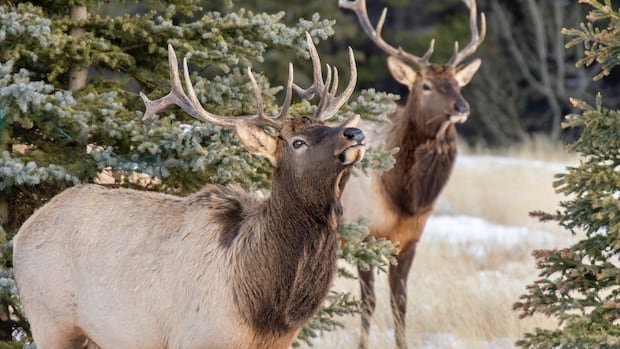
Amidst vibrant orange larches, a resonant call reverberates throughout the Bow Valley during the fall rutting season as male ungulates in North America vie for mating dominance. Elk, commonly seen in Alberta, showcase their dominance through bugling, a distinct communication method observed in the Canadian Rockies.
Research conducted by Jennifer Clarke, a biology professor at the University of La Verne in California, focused on elk populations in Colorado, Pennsylvania, and Wyoming. Clarke’s study revealed that elk in different regions may utilize unique dialects for communication, akin to human populations isolated over time.
The bugle calls of bull elk serve as signals of aggression and readiness to counter any challengers for mating rights. These bugles also convey information about an elk’s age and size, with younger bulls emitting different sounds compared to mature dominant males.
Clarke’s research hinted at a possible link between elk dialect variations and habitat differences, yet the data did not fully support this hypothesis. Genetic factors or learning mechanisms might be contributing to the distinct regional dialects observed among elk populations.
As the elk rutting season unfolds in the Canadian Rockies, caution is urged due to the heightened aggression and unpredictability of bull elk. Elk have been involved in a majority of aggressive wildlife encounters in Canadian national parks, emphasizing the need for vigilance and respect towards these animals.
Nick de Ruyter, program director of the BioSphere Institute’s WildSmart program, emphasized the importance of giving elk ample space to prevent triggering aggressive behaviors. During this period, it is crucial for residents and tourists to maintain a safe distance from elk, especially in public areas where encounters are more likely.
To ensure safety during elk rutting season, individuals are advised to keep a significant distance from elk, avoid approaching for photos or selfies, and adhere to wildlife safety guidelines, such as keeping dogs on-leash and carrying bear spray for added protection.
For more information, please refer to the original article [Source].

