

Montreal police have been expanding their array of AI-driven tools quietly to monitor vehicles and individuals across the city, sparking concerns regarding transparency and privacy rights among the public.
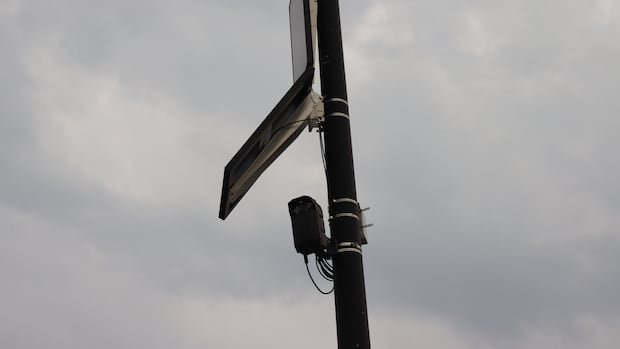
A sophisticated camera capable of scanning and recognizing vehicles was recently sighted by a Radio-Canada journalist on a lamppost along Henri-Bourassa Boulevard in Montreal’s Rivière-des-Prairies neighborhood. Following Radio-Canada’s coverage of the camera, it was swiftly removed on Wednesday.
The camera in question, a Cloudrunner CR-H2, was disclosed to be produced by Genetec, a Montreal-based company, as confirmed by the Service de police de la Ville de Montréal (SPVM). Similar to the controversial Flock Safety cameras widely used in the U.S., the system not only scans license plates but also records specific vehicle details such as color, make, and model, as per the company’s website.
Contrary to Flock cameras in the U.S. that share data in a central database accessible to multiple police forces, Genetec’s system manages the collected information internally by its operator. SPVM’s spokesperson, Marc-Antoine Bélanger, assured CBC News that access to the captured images is restricted solely to the investigators handling the relevant cases.
Bélanger explained that the camera’s removal was a strategic move to safeguard their ongoing investigative methods. He emphasized that the SPVM deliberately maintains secrecy around its technological tools to prevent interference with intricate investigations.
Despite the SPVM’s justifications, privacy advocates argue that the rollout of new technology lacks transparency. Dominique Peschard of Ligue des droits et libertés, a Quebec human rights group, stressed the importance of informing the public about the tools being utilized by the police without jeopardizing their operational effectiveness.
The deployment of Cloudrunner cameras is part of the SPVM’s broader adoption of AI-driven technology. The SPVM acknowledged using iMotion ROC AI software from Rank One Computing to assist investigators in analyzing extensive video footage but denied utilizing the software’s facial recognition or biometric features.
An internal privacy impact assessment obtained by CBC News highlighted potential civil liberties risks associated with the technology, including the inadvertent investigation of innocent bystanders and the risk of discrimination based on visible social characteristics. However, the assessment indicated that the software is configured to search for objects rather than identifiable traits to mitigate the risk of discrimination.
The SPVM’s acknowledgment of the Cloudrunner camera followed a period of confusion, with Montreal police Chief Fady Dagher initially claiming ignorance of the device. Subsequently, Dagher clarified that the camera was being used by the SPVM to target armed violence and vehicle thefts, despite his earlier unawareness.
While only one Cloudrunner camera was identified and removed, the SPVM hinted at the possibility of adding more cameras based on the investigative requirements pertaining to armed violence, motor vehicle thefts, and crimes against merchants.
Andrew Elvish, Genetec’s vice president, emphasized the technology’s privacy-respecting design and assured that every interaction with the gathered data is logged. He underscored the necessity of balancing privacy expectations with community safety concerns.
In light of these developments, calls for stringent oversight and protocols in the use of such surveillance tools have been amplified, emphasizing the critical need to protect individuals’ privacy and rights in the public domain.

