

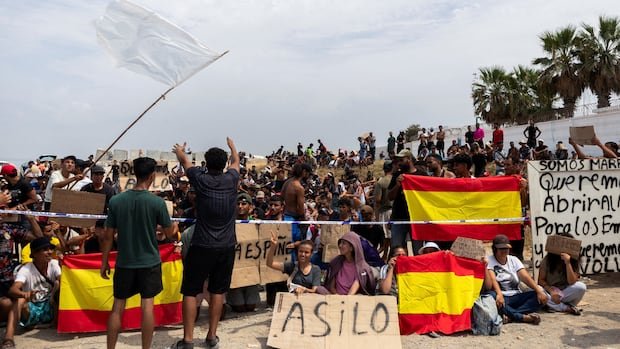
Hundreds of migrants who recently arrived in Ceuta, a North African enclave of Spain, gathered for a protest on a bustling urban beach on Sunday, appealing to Spanish authorities for asylum rather than being sent back to Morocco. These individuals were part of the 5,000 to 8,000 migrants who remained in Ceuta following a mass border crossing two weeks ago, which witnessed over 72,000 people flooding into the small territory inhabited by around 80,000 residents. While the majority of migrants voluntarily returned in the subsequent days, those left in Ceuta were residing in challenging conditions on El Trampolin beach or the city’s peripheries, hoping for an opportunity to travel to mainland Europe.
Ayoub Elarroud from Tetouan, Morocco, expressed the hardships faced by migrants, highlighting their plight of sleeping by the sea amidst cold weather and unpleasant odors, with authorities obstructing their access to the city center. During the protest, demonstrators waved Spanish flags and carried banners with messages like “We don’t want to go back to Morocco” and “We are also human,” while voicing chants such as “We’re tired” and “We need a solution.”
Behind the protesters on the rocky shores, some migrants were seen washing clothes and fishing with rudimentary bamboo rods. The Interior Minister, Fernando Grande-Marlaska, previously stated that irregularly entered migrants would not be permitted to remain in Ceuta, travel to mainland Spain, or acquire legal status, except in rare cases involving extreme vulnerability.
The strained health services in Ceuta were emphasized by Enrique Roviralta, the head of Ceuta’s medical board, who criticized the slow response from the central government, citing exhausted healthcare workers facing outbreaks of infectious diseases like diarrhea and scabies, along with an increase in violence-related injuries.
Health Minister Monica Garcia refuted claims of a collapsed health system but acknowledged the pressure it was under, dismissing associations between migration and illness as unjust and xenophobic. Migrants interviewed revealed their motivations for seeking asylum, citing poor working conditions in Morocco despite possessing higher qualifications. Many migrants, like Mohammed Ouanzar and Emmanuel, expressed their dire circumstances and determination for a better life in Europe through any available job opportunities.
The stories of migrants like Mohammad Ismail Hossain and Ousmane further shed light on the arduous journeys and compelling reasons driving individuals to seek refuge in Ceuta. Despite facing challenges and uncertainties, these migrants remain hopeful for a brighter future, underscoring the complexities and human struggles entwined in the ongoing migrant crisis.

