

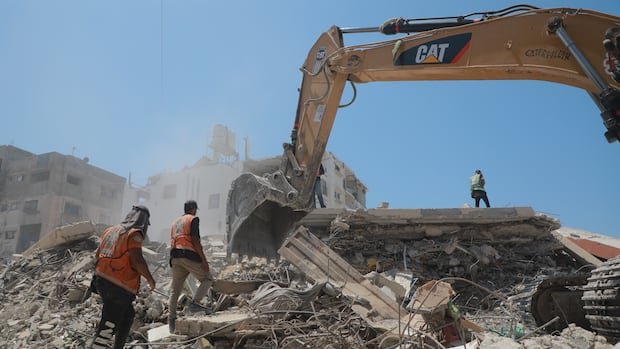
In Gaza City’s heart, members of the Al-Drimli family are using basic tools like shovels, buckets, and a wheelbarrow to search for the remains of a friend and neighbor in the debris of their former residence. Under the scorching sun on a Monday afternoon, the men toil in quiet determination, shielded from the sun by orange towels or their sweatshirt hoods. The clinking of shovels against rubble and the hum of an electric saw echo through the air.
With limited excavators in Gaza, families like the Al-Drimlis resort to manual labor, clearing rubble by hand to uncover lost loved ones. Despite having already found the remains of their family members, they continue their search for a neighbor who was with them when the building was struck in November 2023.
According to the Gaza Health Ministry, an estimated 8,000 to 10,000 bodies remain buried under the wreckage nearly three years after the conflict between Israel and Hamas began. The scarcity and high cost of equipment have forced families like the Al-Drimlis to rely on primitive tools for their grim task.
Ayman Al-Drimli explained to a freelance videographer that the steep expenses and lack of available machinery have compelled them to use manual labor. Gaza struggles with a shortage of functioning excavators, with only about a dozen barely operational machines in the area. Maintenance challenges, fuel shortages, and the unavailability of spare parts further hinder the operation of these vital machines.
Samir Sabra, who operates two excavators in Gaza, highlighted the financial strain of running the equipment, citing the significant cost of fuel alone. The limited resources and the intense demand for excavation services make it challenging to address the extensive destruction and clear the rubble effectively.
The ongoing scarcity of heavy machinery in Gaza has prolonged the process of recovering remains from the rubble. Mahmoud Basal, a spokesperson for the Palestinian Civil Defence, emphasized that the Israeli army’s strategy during the conflict targeted and destroyed essential equipment, exacerbating the challenges faced by rescue teams.
Despite the ceasefire agreements and promises to facilitate the entry of heavy machinery for clearing operations, the situation on the ground remains dire. Basal expressed concerns about the prolonged efforts required to retrieve bodies if the current limitations persist.
International humanitarian aid organizations have raised alarms about Israeli restrictions on crucial supplies like fuel, oil, and spare parts, hindering relief efforts in Gaza. The entry of heavy equipment is crucial for accelerating the recovery process and ensuring the dignified retrieval of bodies trapped under the rubble.
As Uday Sabra continues his painstaking excavation work in Gaza City, the demand for services exceeds the capacity of the available machinery. The challenges persist as families and rescue teams strive to bring closure to the victims of the conflict and address the extensive devastation left in its wake.

