

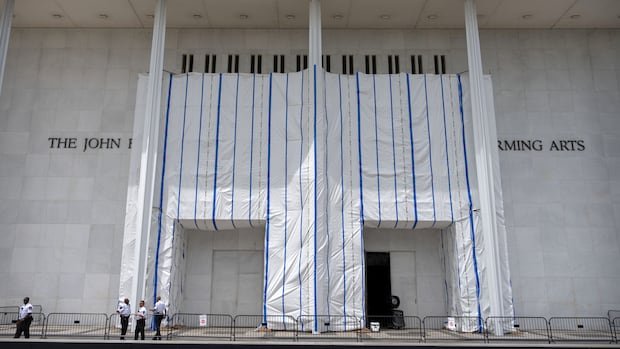
The dispute surrounding the future of the Kennedy Center intensified on Thursday as supporters of U.S. President Donald Trump within the board made moves to honor him through physical alterations to the renowned arts venue, potentially defying a court ruling. In a lengthy virtual meeting, the board decided to incorporate Trump’s name into the façade, renaming it as “The John F. Kennedy Center for the Performing Arts Restored and Renovated By President Donald J. Trump.” Additionally, plans included naming the plaza in front of the building after Trump and closing a significant portion of the venue for two years to facilitate extensive renovations.
Representative Joyce Beatty, an Ohio Democrat and ex-officio board member, along with her legal team, characterized these changes as a significant challenge to U.S. District Judge Christopher Cooper’s authority. Judge Cooper had previously ruled in May that affixing Trump’s name to the building was unlawful, ordering its removal, a decision that the Trump administration failed to reverse through legal avenues. Moreover, Cooper had halted the planned two-year closure, denouncing the board’s decision as uninformed and predetermined.
Beatty criticized the recent developments as an apparent effort to sidestep the court’s decision and violate congressional statutes. She affirmed her commitment to safeguarding the historical significance of the national monument. The Kennedy Center representatives did not immediately provide a response to requests for comments on the matter.
The board meeting primarily focused on the necessary closures for the renovation work to enhance safety standards at the Kennedy Center. In response to the previous criticism from Judge Cooper, the management offered three closure options for the board’s consideration. These options ranged from a complete closure to a phased shutdown focusing solely on the critical infrastructure needs, while still maintaining an active programming schedule.
Ultimately, the board opted for a complete two-year closure of the building, while leaving room for potential programming in an outdoor space known as the Reach. This decision, coupled with the efforts to honor Trump, raised questions about the thorough evaluation of alternative options by the board.
Trump’s second term has seen a notable shift in his engagement with the Kennedy Center, symbolizing his authoritative stance. Following his return to office, Trump swiftly replaced the institution’s leadership with his own appointees, who subsequently named him as the board chairman. Despite initial attempts to inscribe his name on the building, subsequent legal orders forced its removal. Trump’s broader agenda to reshape Washington, including contentious projects like the White House East Wing demolition and the Lincoln Memorial Reflecting Pool renovation, has faced legal hurdles and public scrutiny.
The Kennedy Center leadership has emphasized the urgent need for repairs and upgrades within the institution. Executive Director Matt Floca highlighted severe water damage and aging equipment during a media tour, advocating for a comprehensive renovation approach over piecemeal repairs. The legal wrangling over the Kennedy Center’s fate has drawn attention and humor, notably during comedian Bill Maher’s acceptance of an award at the center, underscoring the ongoing tensions surrounding the institution’s future.

