

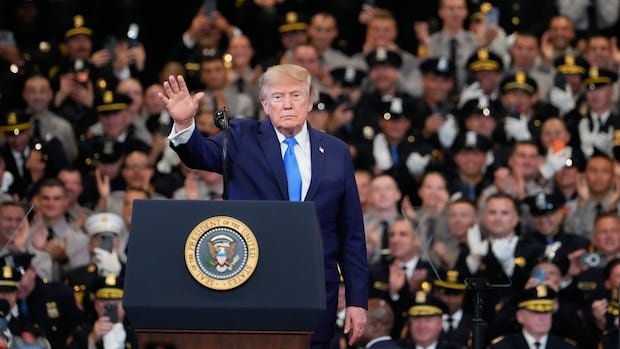
President Trump encouraged Americans to accept slightly higher gasoline prices as a means of preventing Iran from acquiring nuclear weapons. He hinted at declaring the Strait of Hormuz a U.S. territory. The President’s stance on fuel costs poses political risks as it contradicts his pledge to reduce energy expenses. Democrats are leveraging the economic implications of potential conflict with Iran ahead of the upcoming midterm elections.
During a speech in Garden City, NY, President Trump emphasized the importance of the sacrifices being made to prevent a hostile nation from obtaining nuclear capabilities. He defended his actions against Iran, asserting that the U.S. was serving a global interest by maintaining its stance.
Approximately 20% of worldwide oil and LNG shipments pass through the Strait of Hormuz, causing concerns about potential disruptions and driving up oil prices. President Trump’s comments on possibly declaring the strait as U.S. territory have raised questions about the seriousness of his statement and its policy implications.
In response to Trump’s statements, Iran’s deputy foreign minister, Kazem Gharibabadi, dismissed the idea of the strait being controlled by external forces, emphasizing Iran’s authority over the waterway’s operations. The escalating tensions around the Strait of Hormuz continue to impact global energy markets, with oil prices on the rise, nearing $90 per barrel for Brent crude and around $4 per gallon for U.S. gasoline.

