

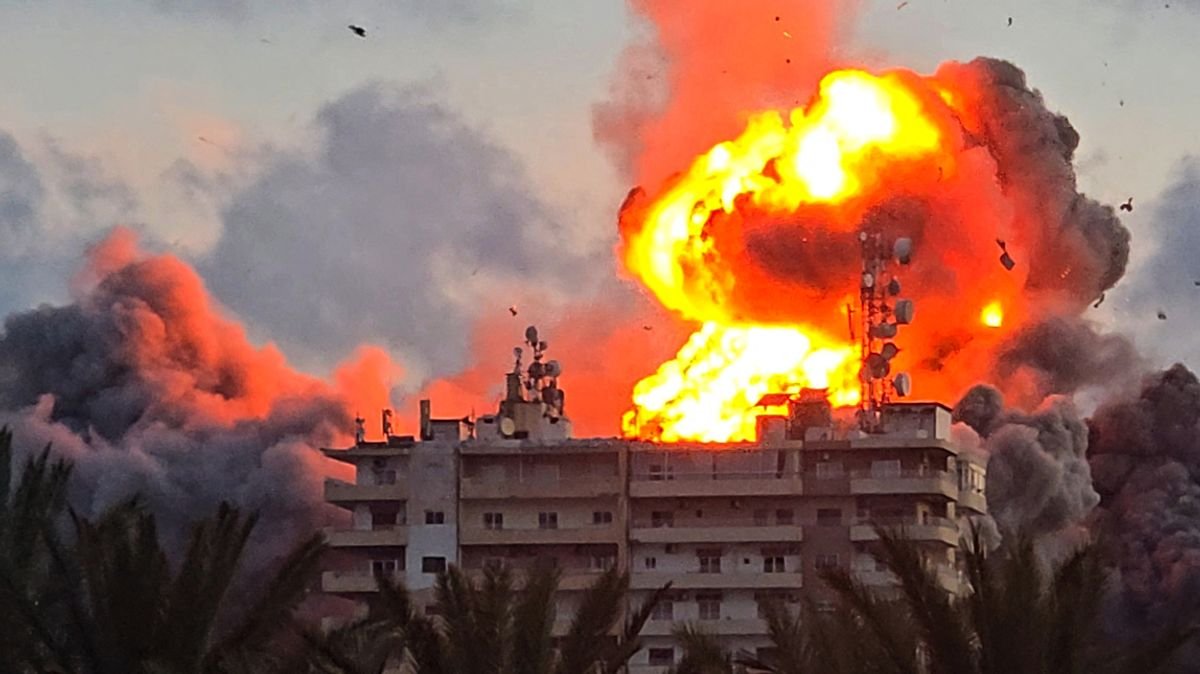
Israeli forces have advanced further into Lebanon, marking the deepest incursion in 26 years following Prime Minister Benjamin Netanyahu’s orders to strike Beirut, breaking a fragile ceasefire.
The escalation, leading to concerns of a humanitarian crisis, was exacerbated by renewed US missile attacks on the Iranian military and Tehran engaging in hostilities with neighboring states. Beirut’s precarious ceasefire collapse has raised doubts about the prospects for peace in the Middle East, with peace negotiations contingent on ending the conflict in Lebanon, as emphasized by Tehran.
Anticipated large-scale bombing operations in Hezbollah strongholds in southern Beirut are expected soon, prompting thousands of refugees to flee their residences, exacerbating an already dire situation.
The primary target of the Israeli offensive is believed to be the Daraya suburb of Beirut, one of three key Hezbollah strongholds in the region. Over 1.2 million Lebanese individuals are now registered as refugees, having fled the fighting in the south, with no resolution in sight between Hezbollah and Israeli forces.
Hezbollah has launched rocket attacks on northern Israel in its latest aggression, targeting the city of Haifa. Israeli airstrikes in southern Lebanon overnight resulted in six fatalities, including a Syrian national near Nabatiyeh.
The Israeli military reported intercepting two projectiles launched from Lebanon toward Israeli territory. Iran’s foreign minister, Esmaeil Baghaei, emphasized the necessity of a ceasefire in Lebanon as a fundamental prerequisite for any potential resolution to the conflict.
According to Iran’s stipulations, the two conflict zones are closely intertwined, as discussions persist to end the US-Iran conflict over Tehran’s nuclear aspirations. Israeli troops have seized the symbolic Crusader Beaufort Castle in southern Lebanon, surpassing previous boundaries set by the Litani River.
Concerns have been raised that Israel may be aiming to occupy extensive areas in southern Lebanon, with Prime Minister Nawaf Salam accusing Israel of employing a “scorched-earth policy and collective punishment” in the region. President Donald Trump responded to critics, urging them to “sit back and relax,” asserting that the situation would eventually be resolved positively.
Trump indicated that Iran is eager to strike a beneficial deal with the USA. Air skirmishes between the US and Iran resumed over the weekend, with American forces targeting Iranian missile units.
Kuwait faced attacks from Iran’s Islamic Revolutionary Guard Corps, activating sirens and deploying air defenses against incoming missiles. The IRGC also claimed to have targeted a US air base, likely a military installation within Kuwait.
Previously, the US and Iran seemed to be making progress towards an initial agreement to halt the hostilities. The proposed deal aims to reopen the Strait of Hormuz, lift the US blockade, and provide a window for discussions on Iran’s nuclear program and US sanctions.
While Tehran has insisted on including its proxy forces, such as Hezbollah in Lebanon, in a long-term peace agreement, Israel advocates for their exclusion.

