

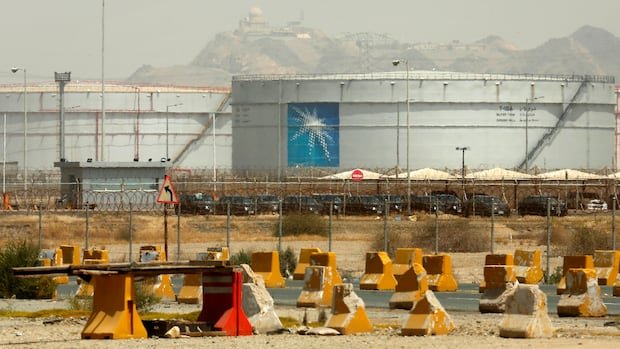
Yemen’s Iran-aligned Houthi rebels launched attacks on four cities in southern Saudi Arabia, causing over 70 injuries and igniting oil facilities, marking a significant escalation in the ongoing conflict in the Middle East. The Houthis, who dominate most of Yemen’s populated regions, including the capital, claimed to have conducted a wide-ranging operation deep into Saudi territory. Their assault involved drones and missiles targeting a Saudi airbase in Khamis Mushait, as well as assets owned by Saudi Arabia’s state oil company in Abha, Najran, and Jazan, a major port on the Red Sea.
The Saudi authorities reported fires at these locations and indicated that 73 individuals, including women and children, were wounded. The scale of the casualties suggested that these attacks were among the most substantial against Saudi Arabia since the onset of the conflict involving the United States, Israel, and Iran earlier in the year. While immediate images of the aftermath were not available, the Houthis shared photos of an explosion, claiming to have hit Saudi trucks at the border in a separate incident.
The Houthi assaults in southwestern Saudi Arabia have the potential to exacerbate the global economic repercussions of the conflict by disrupting energy supplies in the Middle East beyond the strategically crucial Strait of Hormuz. Following a period of relative calm in August, hostilities in the region have reignited, with Iran and the U.S. engaging in confrontations that have driven global oil prices upwards, surpassing $99 per barrel on Tuesday.
The conflict between Saudi Arabia and the Houthis has been ongoing for over a decade, with the Saudi-led Arab coalition intervening in Yemen to counter the rebel group’s influence. Despite prior periods of relative peace, the ceasefire has collapsed, with the Houthis now posing threats to shipping in the Red Sea. In response to the recent attacks, Colonel Turki al-Malki, the spokesperson for the Saudi-led coalition, emphasized their commitment to deterring the Houthi militia and confronting their aggressive actions.
The Gulf conflict has evolved into a standoff between the U.S. and Iran, with both sides employing economic pressure through blockades in a bid to force concessions from the other. The U.S. aims to ensure the smooth flow of oil through the Strait of Hormuz while restricting Iran’s exports, whereas Iran has announced plans to establish a maritime exclusion zone in the Persian Gulf as a countermeasure. Recent incidents, including the exchange of fire between the U.S. and Iran involving ballistic missiles, underscore the heightened tensions in the region.
Despite U.S. efforts to weaken Iran’s military capabilities and economy, the country still possesses weaponry capable of threatening oil tankers transiting the Strait of Hormuz and targeting U.S. military installations in the region. Approximately 20% of global oil and liquefied natural gas shipments historically passed through the strait before the onset of the conflict.
The recent clashes between the Houthis and Saudis have displaced around 18,500 individuals in Taiz and Hodeida in southwestern Yemen, adding pressure to communities in the region. The International Organization for Migration highlighted the dire situation, with many displaced families arriving without basic necessities and facing uncertainty about their safety. The civil war in Yemen began in 2014 when the Houthis captured Sanaa and other parts of northern Yemen, leading to a Saudi-led coalition intervention the following year to restore the exiled government. The conflict has resulted in significant loss of life, with UN estimates indicating at least 150,000 fatalities and recurrent threats of famine in the country.

