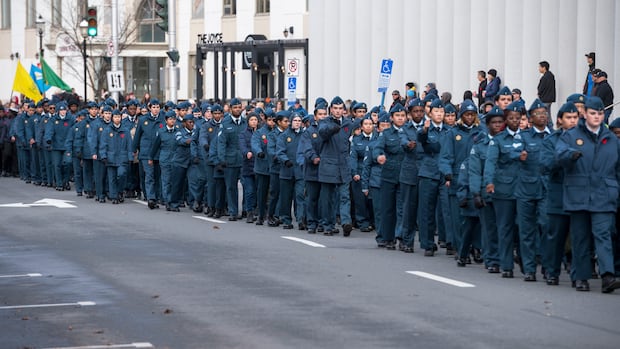
On Monday, Defence Minister David McGuinty announced that the budget for cadet and junior ranger programs will be increased, allowing weekend training and other activities to proceed into the upcoming year.
Due to ongoing budget constraints within the Department of Defence, the Canadian military had suspended most cadet training across various regions of the country.
This suspension included weekend training and competition participation, which was expected to last until the fiscal year ends in March. However, weekly parade nights were planned to continue while the department assessed program funding.
The halt prompted significant backlash from the public and the Opposition Conservatives. Several Liberal MPs have reported a surge of complaints and inquiries from constituents concerning the Defence Department’s allocation of funds, especially at a time when the military is receiving billions in additional spending.
-
More cadets, more money, less training: Military defends controversial suspension
-
Cadets being told to stand down as Canada adds billions to defence
-
Funding cuts leave northern cadets out in the cold
McGuinty emphasized the importance of the cadet program for youth and confirmed that the government will allocate additional resources.
“We’ve listened to your concerns regarding changes to scheduled activities,” he stated while entering the House of Commons.
“We can confirm that additional funding will be made available to ensure that planned cadet and junior Canadian ranger activities can proceed for the remainder of the fiscal year.”
The exact amount of the financial boost remains uncertain.
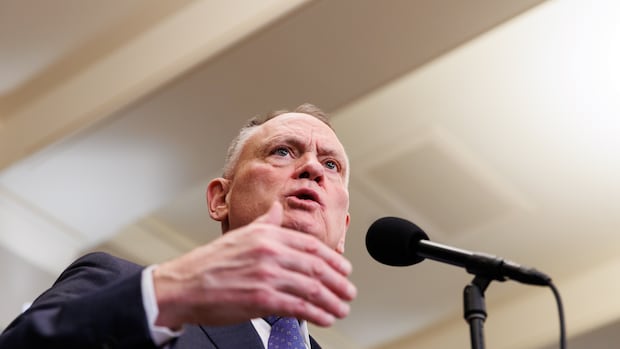
On Friday, National Defence Minister David McGuinty stated that the government would allocate additional funds to the Canadian cadet program, allowing activities to resume until March 31, after the Canadian Armed Forces had suspended most cadet training due to budget constraints.
This is a significant turn of events, particularly as just last week, the deputy head of the Canadian military supported the decision to pause training and other activities until March 31 and the start of the new budget year.
Vice-Admiral Angus Topshee informed a House of Commons committee that the cadet program had seen an increase of approximately 20,000 members over the past few years, with annual funding for the program rising to $265 million.
“Sadly, a lot of the cadet funding is allocated upfront during the summer months,” Topshee explained on Thursday.
“Thus, they used a significant portion of that expanded budget on summer training, without accounting for the considerable rise in the number of cadets in the program.”
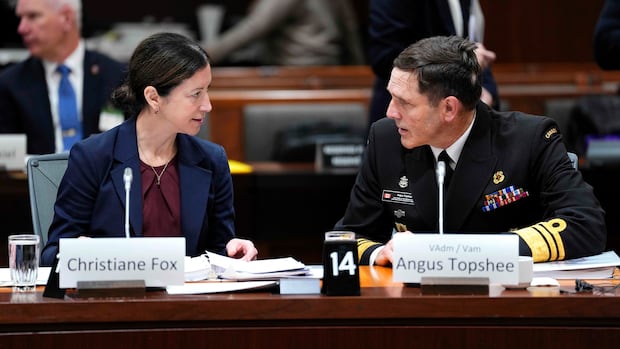
When Conservative MP William Stevenson inquired about the cancellation of certain cadet training activities, Deputy Minister of Defence Christiane Fox pointed out that the program had received a $27-million budget increase in the spring of 2026. Vice-Chief of the Defence Staff Angus Topshee indicated that most funding had been front-loaded for summer training.
He noted that in spite of the budget increase, the cadet program had “encountered a strict limit on the funds allocated” and it was crucial for the department to operate within its financial constraints.
On Monday, McGuinty defended the budget management of the cadet program, stating that new recruits can enroll at any time, complicating financial management.
“When we reflect on the growth, it has been substantial,” McGuinty remarked.
He added that a review is currently underway to determine the appropriate size of the cadet program budget.
-
Former N.L. cadets call on Canada to restore weekend training activities
-
N.B. cadet volunteers, parents push back as military halts flights, competitions
The original decision to tighten the cadet program budget was part of a broader set of internal cost-cutting measures at the Department of National Defence.
While the Liberal administration has significantly increased defence spending and largely exempted the department from its expenditure review program, it has also instructed DND to concentrate its substantial new investments on priority areas, such as acquiring new equipment.
Simultaneously, the department remains subject to reductions established in a previous federal budget approved by the Trudeau government.
These cuts to operations and maintenance funding are continuing this year, with DND expected to achieve $459 million in savings.
McGuinty emphasized the significance of the debate surrounding the cadets and the government’s decision to provide some budget flexibility.
“It conveys the message that we are prudent with financial outlays, that we are responsible with Canadian taxpayers’ money, and that we must operate within a budget,” McGuinty stated.
“It’s crucial for Canadians to recognize that while there have been considerable increases in funding for defence and the Canadian Armed Forces, that amount is not boundless.”