
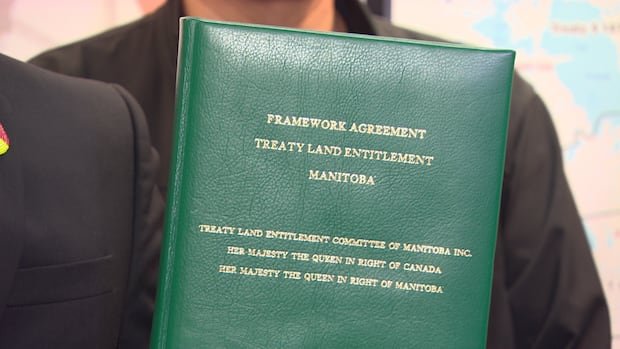
A federal judge recently criticized Canada for failing to meet its obligations to a group of Manitoba First Nations as outlined in a significant agreement to address historical treaty land shortages. The Manitoba Framework Agreement, signed in 1997 by the province, the federal government, and the Treaty Land Entitlement Committee of Manitoba, aimed to provide land to First Nations that had received inadequate land under Treaties 1, 3, 4, 5, 6, and 10.
According to the committee’s annual report, of the approximately 445,000 hectares of land owed to the 21 eligible First Nations under the agreement, slightly over half had been converted to reserve land by last March. In her ruling on August 21, Federal Court of Canada Justice Julie Blackhawk expressed disappointment with Ottawa’s continual delays in fulfilling its commitments under the agreement.
Blackhawk criticized the federal government for using vague references about consulting with other Indigenous communities as a reason for postponing the implementation of the 1997 agreement. She emphasized that this duty to consult does not excuse Canada from fulfilling its obligations under the deal and stated that Canada cannot indefinitely delay fulfilling the settlement based on this vague duty.
Despite the federal government’s assertion of commitment to reconciliation, Blackhawk found such promises lacking in the context of this case. The judge’s decision followed a motion by the committee as part of its 2022 claim against Ottawa over breaches of the 1997 agreement.
The roots of the lawsuit date back to a decade ago, with the Treaty Land Entitlement Committee using the dispute resolution process in 2016 to allege that Canada’s consultation with the Métis did not comply with the agreement. An independent arbitrator in 2018 ruled that Canada had materially breached the agreement’s terms, which required it to use “best efforts” and avoid unilateral changes. Despite this finding, Canada did not rectify the breaches, leading to the court’s ruling in 2021 that the First Nations were no longer bound by terms preventing legal action for insufficient land allocations under the treaties.
While acknowledging the federal government’s commitment to reconciliation, Blackhawk’s ruling had mixed outcomes for both parties. She dismissed Canada’s argument that the committee must exhaust the dispute resolution process before seeking relief for breaches of the agreement. However, she agreed with Ottawa’s perspective that the agreement and land entitlements operate prospectively, rejecting the committee’s claim for retroactive land entitlements.
Efforts to reach an out-of-court resolution in 2023, including a $3.5-billion compensation package, dissolved, as noted by the Treaty Land Entitlement Committee. Committee president Nelson Genaille indicated plans to appeal Blackhawk’s ruling, emphasizing the need for Canada to fulfill its obligations and provide the land promised to the First Nations for economic development opportunities.

