
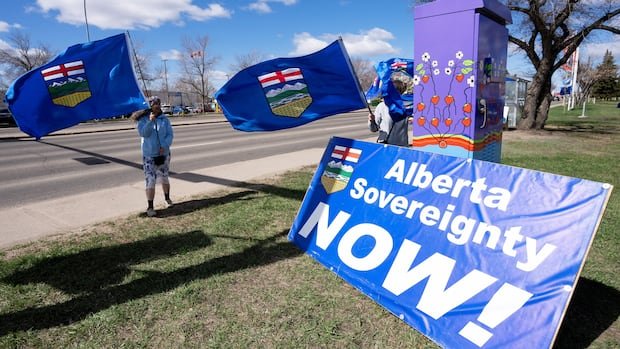
Internal federal documents have provided insights into Ottawa’s evaluation of the potential economic repercussions of Alberta separating from Canada and establishing itself as an autonomous state. The documents, originating from Finance Canada and the Justice Department, also outline the ramifications being contemplated due to the uncertainty stemming from Alberta’s separatist movements.
Confidential Finance Canada briefing notes, disclosed to CBC News under access to information legislation, reveal that the federal government has been discreetly analyzing the potential consequences of a projected $18 billion fiscal shock, a mass departure of corporate headquarters, and a significant outflow of Albertans relocating to neighboring provinces in the event of Alberta’s secession from the federation. Additionally, the documents raise concerns about the adequacy of federal pension laws in addressing the scenario of Alberta’s exit from the Canada Pension Plan.
Although a substantial portion of the documents was redacted, they offer insights into various scenarios and outcomes being deliberated by the government this season. The documents, dated June 2026, coincide with Alberta’s upcoming referendum on October 19, where residents will determine whether the province should remain within Canada or initiate a future vote for independence. While previous analyses have predominantly focused on the impact on Alberta itself, these documents underscore the potential economic repercussions for both Canada and the province, even in anticipation of a separation referendum.
Drawing parallels to the 1995 Quebec referendum, the analysis highlights how economic uncertainties can arise amid such political events. It references historical data indicating that following the Quebec referendum, financial conditions tightened both provincially and nationally, leading to postponed investment decisions by businesses awaiting clarity on future economic arrangements. The documents also cite examples from Quebec’s history, where a significant number of major corporate headquarters relocated out of Montreal due to persistent uncertainties, suggesting a similar exodus could occur in Alberta, particularly among non-resource sector companies.
Addressing the potential exodus of skilled workers, the documents point out that Alberta experienced a notable influx of highly educated individuals in 2021, emphasizing that an independent Alberta could witness a substantial departure of such skilled workers. The federal government, in response to inquiries about the impact assessment of the Alberta referendum, indicated that it is conducting its own analysis based on various third-party economic evaluations to gauge the potential costs of Alberta’s secession.
Furthermore, the analysis underscores the significant economic contributions of Alberta to the rest of Canada, with the province averaging an $18 billion net fiscal contribution annually between 2022 and 2024. Accounting for 15% of the national GDP over the past decade and generating 31% of Canada’s exports, primarily from the energy sector, Alberta plays a crucial role in the country’s economic landscape.
Economist Trevor Tombe, from the University of Calgary, has conducted a similar analysis on the economic impacts of Alberta’s separation, highlighting the financial implications for both Alberta and Canada. Tombe’s findings suggest that while Canada would incur losses if Alberta were to secede, the primary economic repercussions would be borne by Alberta itself. In addition, the analysis delves into the potential effects on the Canada Pension Plan, emphasizing concerns raised by the chief actuary regarding the legislation governing the pension plan and the complexities involved in divesting Alberta’s share from the fund’s diversified investments.
Overall, the documents shed light on the intricate economic considerations and uncertainties surrounding Alberta’s potential separation from Canada, underscoring the significance of this issue for both the province and the country as a whole.

