

The intense heatwaves of this summer have drawn many Brits to the coast. Along with people, numerous fascinating creatures have also been lured by the high temperatures.
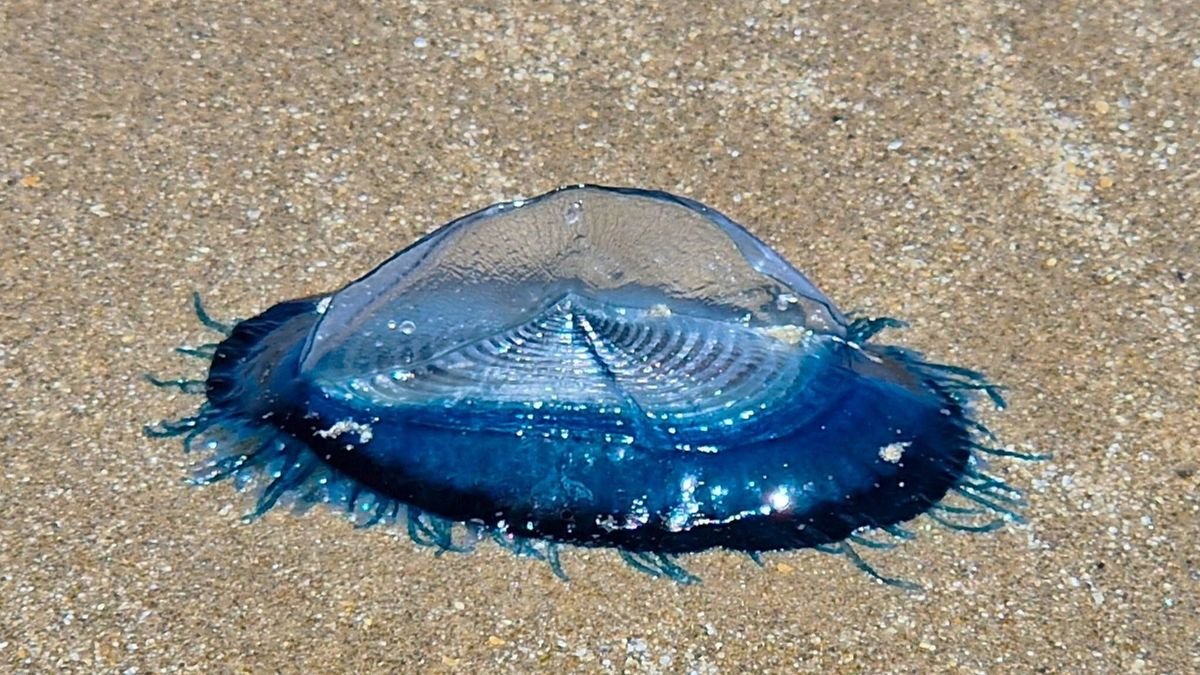
Many electric blue animals, believed to be Velella Velella or by-the-wind sailors, have been discovered washed ashore on our beaches as the mercury soared. At St Bees beach in Cumbria, several were spotted over the weekend, while a large number were found on the Welsh coastline earlier in the season.
Although these creatures are closely related to the Portuguese Man o’ War, which can deliver painful stings and even be deadly in rare instances, the Velella Velella are considered to be less harmful. However, caution is advised against touching them.
Normally inhabiting the Atlantic, Indian, and Pacific oceans, these creatures have been appearing in larger numbers due to the recent surge in temperatures, reaching nearly 40°C in some areas of the UK. While the weather remains warm, a change is expected in the coming days.
Experts anticipate that beachgoers will encounter more of these electric blue creatures throughout the summer. Visitors who have encountered them have expressed surprise at their presence. Louise Nicholson, who encountered them at St Bees beach, initially mistook one for seaweed.
Georgia de Jong Cleyndert, Head of Marine at the Cumbria Wildlife Trust, warned that despite not being jellyfish, the creatures have a mild sting even after washing ashore. It is advised not to touch them as they are composed of hundreds of tiny animals functioning as a single floating colony.
Marine specialist Frankie Hobro, from Anglesey Sea Zoo in Bynsiencyn, explained that the sting of these creatures is generally mild compared to the Portuguese Man o’ War but touching them is still unwise. She recommended avoiding contact with sensitive areas like the face or lips, as it could cause discomfort.
These by-the-wind-sailors, described as “colonial hydroids,” are not individual creatures but rather a collective of tiny animals forming a colony. Hobro highlighted the early and frequent arrival of Portuguese Man o’ War, indicating the impact of climate change on oceanic currents.

