
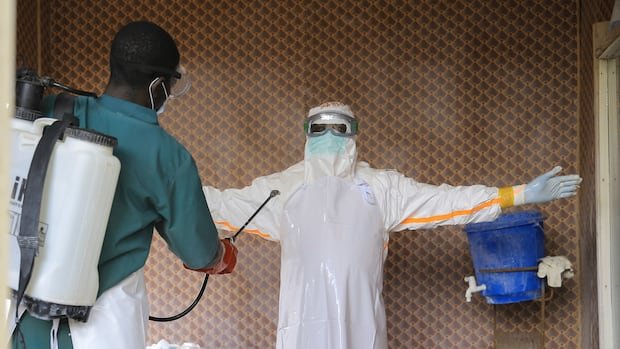
The Ebola outbreak in the Democratic Republic of the Congo has surpassed 4,000 deaths, according to officials grappling with containing the virus.
Recent data from the health ministry revealed that 4,018 individuals have succumbed to the disease, accounting for almost half of the 8,300 confirmed cases, marking it as the most rapidly expanding Ebola outbreak in history.
The outbreak was declared on May 15, triggered by the uncommon Bundibugyo virus, for which there is no known cure or vaccine.
In Bunia, the main city in northeastern Ituri province and the epicenter of the outbreak, some healthcare workers, including members of the surveillance team responsible for identifying individuals exposed to infected patients, staged a protest demanding payment for overdue wages. However, authorities swiftly dispersed the demonstrators, who carried banners proclaiming “No money, no data!” and “No payment for months.”
Frontline workers have staged multiple strikes since the onset of the outbreak, further impeding containment efforts.
A senior UN official reported that soldiers searching for weapons in Kigonze, on the outskirts of Bunia, inadvertently set fire to an Ebola-affected camp housing a transit center for infected patients earlier this week. This incident forced 19,000 camp residents to flee.
Julien Harneis, the UN’s senior Ebola coordinator, emphasized the challenges in establishing Ebola transit and treatment facilities due to the scarcity of funds and personnel.
An aid worker from Médecins Sans Frontières (Doctors Without Borders) contracted Ebola while working in the Congo. The infected individual was airlifted to the Netherlands on a special medical flight and admitted to a high-level isolation unit at Leiden University Medical Center.
Médecins Sans Frontières highlighted the unprecedented human toll of the crisis in the DRC, with communities facing the largest Ebola outbreak ever recorded in the country, where over 50 healthcare workers have lost their lives to the virus.
The World Health Organization has raised concerns about the rapid spread of the virus into new health zones, straining already limited resources. The Africa CDC noted a decrease in newly confirmed cases, attributing it to challenges in garnering community cooperation in certain hotspots.
While the disease’s spread has decelerated in some regions, it has intensified in others, leading experts to describe the situation as precarious.
Confirmed cases have trended downward in recent weeks, dropping from approximately 850 cases and 470 deaths per week in mid-July to an average of 490 cases and 230 deaths in September.
An incident where a Congolese politician was fatally attacked for supporting government measures in handling the outbreak underscores the tensions straining both the healthcare community and local resources.
Marie-Célestin Karondwa, a local official from Congo’s ruling Union for Democracy and Social Progress party, was assaulted and killed at his Butembo residence, an Ebola hotspot in eastern North Kivu province, after defending the government’s response to the outbreak.
Mistrust towards healthcare workers and authorities has hindered efforts to curb the DRC’s 17th Ebola outbreak. Efforts to adopt a village-centered approach have encountered resistance from residents who view Ebola as a hoax, fueled by deep-seated distrust in the government due to past Ebola response mismanagement and pervasive corruption.

