

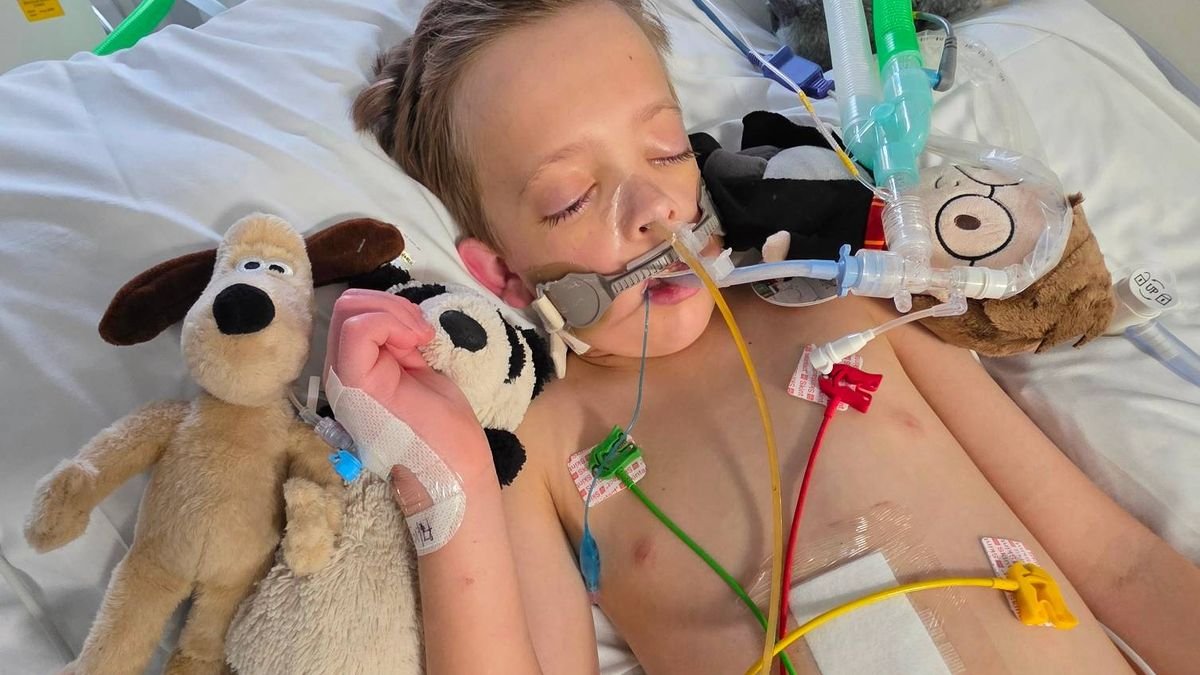
A young boy from Cornwall faced a severe seven-liter blood loss, where his body rapidly lost blood during transfusions. Elliott Wills, residing in Truro, miraculously survived this traumatic incident post a routine surgery last October. Suffering from spherocytosis, an inherited blood disorder, Elliott encountered a ruptured main artery during recovery, leading to a critical blood loss that had medical professionals preparing his family for the worst.
Rushed to the operating theater, Elliott’s situation was dire, with a team of 20 personnel fighting for three hours to sustain his life, as he hemorrhaged the donated blood almost as quickly as it was transfused. His father, Phill Wills, described the tense moments when a significant amount of blood was lost, emphasizing the urgency of the situation.
Thanks to the dedicated medical team and 23 units of blood products—potentially from 23 individual donors—equivalent to seven liters, Elliott managed to survive. His family credits blood donors for his recovery and urge more individuals to donate blood regularly to save lives like his.
Elliott’s ongoing need for B negative blood for routine transfusions was further complicated last year by virus-related complications, resulting in the removal of his spleen and gall bladder during a challenging five-hour operation at Bristol Royal Hospital for Children. Despite initial success, Elliott faced severe internal bleeding post-surgery, requiring immediate intervention.
After a tumultuous recovery period including induced coma and seizures, Elliott eventually returned home and resumed normal activities, albeit with some limitations. Grateful for the blood donors who saved his life, Elliott is looking forward to his upcoming 14th birthday, a milestone he thought he might never reach.
Emphasizing the crucial role of blood donation, healthcare professionals stress the ongoing need for donors, especially those with O negative and B negative blood groups. The NHS aims to recruit over 155,000 new donors this year to meet patient demands effectively, with a particular call for donors of Black heritage to support sickle cell patients.
Elliott’s story serves as a reminder of the lifesaving impact of blood donations and the continuous demand for blood to support various medical treatments, including cancer care and surgical procedures. To contribute to this vital cause, individuals are encouraged to sign up for blood donation appointments through the NHS Give Blood app or the official website.