

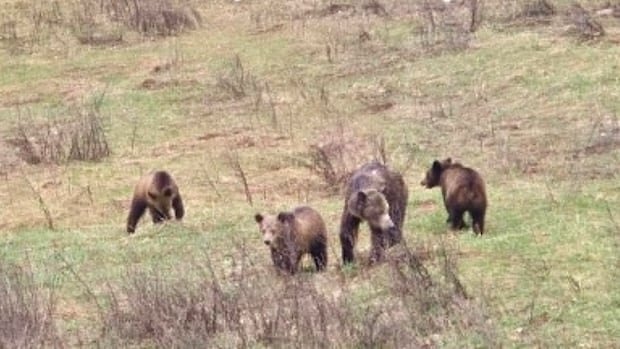
In a recent development, the B.C. Conservation Officer Service announced that it had euthanized a mother grizzly due to safety concerns, as the animal displayed food-conditioned behavior and a lack of fear towards humans. Additionally, two remaining yearlings from the same family were safely relocated to an undisclosed location for ongoing monitoring. The service declined an interview request from CBC News.
A protest rally was held in Nelson, B.C., opposing the decision to euthanize a young grizzly bear, part of a well-known bear family that frequents the area. Katie Graves, founder of the Ursa Project Society, described the emotional scene at the rally with tears and hugs among community members.
Graves argued that the young grizzly, which had a leg deformity or injury, should not have been put down. She highlighted the bear’s mobility and ability to keep up with its family, emphasizing that many bears with similar conditions lead full lives in the wild.
The B.C. Conservation Officer Service stated that the bear’s age, injury, and prior conflicts made rehabilitation or relocation unsuitable. The service expressed regret over the necessity of euthanizing bears under such circumstances, noting the difficult decisions involved.
The incident has sparked a public outcry with many criticizing the decision to kill the grizzly bear. Community members stressed the importance of better waste management practices to avoid conflicts with bears in the future.
Wildlife biologist Clayton Lamb emphasized the need for stronger policies to reduce attractants and prevent bear-human conflicts. He highlighted the challenges of rehabilitating habituated bears and stressed the importance of managing attractants to deter bears from entering urban areas.
The City of Nelson announced measures to mitigate conflicts and maintain a safe environment for both bears and residents. Initiatives include installing bear-resistant garbage cans, educational programs, and enforcing waste management regulations to prevent potential conflicts with wildlife.

