

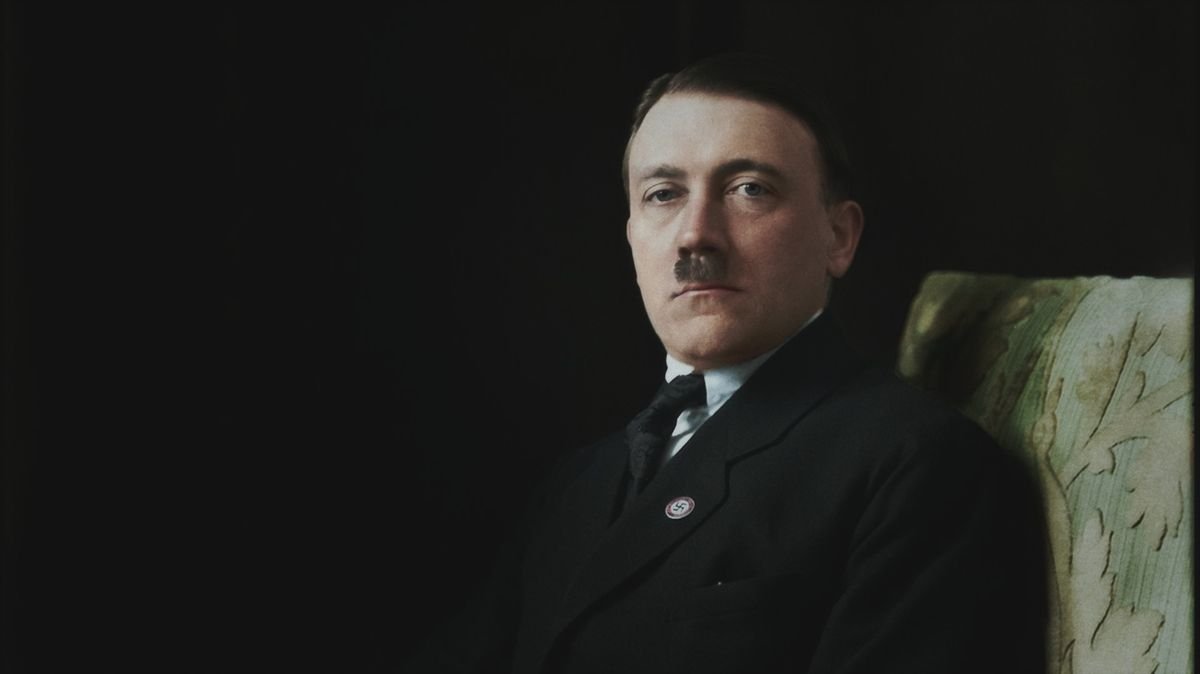
In a captivating moment, he fixed his intense blue gaze on her, then knelt down and rested his head in her lap. To Helene Hanfstaengl, he appeared as a charming and charismatic young individual. Little did she know that she was face-to-face with a figure of malevolence. Recalling the encounter, Helene shared, “He had a way with words, truly captivating. I was seated on the sofa when he knelt, placed his head in my lap, and said, ‘Oh, if only I had someone to care for me.’ I suggested, ‘Why not find a lovely wife and get married?'” Adolf Hitler’s response was firm: “I can never marry as my life is devoted to my country.”
This revelation unfolds in a fresh Channel 4 series titled Dictator: The Hitler Interviews, airing at 9pm on Saturday, August 1st. The documentary showcases archival clips from Hitler’s devoted followers, compiled for the first time to provide insights into the man behind the dictator. Helene Hanfstaengl, born in New York and married to Ernst “Putzi” Hanfstaengl, a Harvard-educated German-American businessman, played a significant role as an early confidante and financial supporter of Hitler, serving as the foreign press chief for the Fuhrer. Through their interviews, a deeper understanding emerges of Hitler’s manipulation tactics in garnering support for his heinous schemes.
Reflecting on their initial encounter shortly after Hitler assumed leadership of the Nazi Party in 1921, Putzi fondly recollected, “When I first heard him speak in a chaotic gathering, I felt an irresistible pull towards him.” Praising Hitler’s oratory skills, he added, “His voice was commanding, overpowering.” In his memoir, Hitler: The Missing Years, Putzi claims that the dictator harbored feelings for his New York-born wife. Helene remarked, “In a way, he did. To the extent that he could love anyone. He possessed striking blue eyes and knew how to use them. His manner of hand-kissing was distinctly Austrian and charming.”
Hitler’s unwavering self-assurance was equally captivating. Helene noted, “He exuded absolute certainty about himself. He had no patience for those who spoke; he was the one who held the floor, while others listened.” By 1923, Hitler was driven to elevate the Nazis into a formidable entity, his ambitions spurred by the radicalization following Germany’s defeat in World War I.
Amidst varied perspectives on Hitler, Elisabeth Popp offers a unique narrative. In 1913, as a young girl, she encountered a destitute Adolf Hitler renting a room in her family’s Munich residence. Following Hitler’s rise to power and her father’s passing, Hitler extended financial aid to the Popp family through royalties from Mein Kampf. Elisabeth recalled, “The war’s defeat deeply affected him, stirring a profound bitterness. His animosity towards the Jews stemmed from personal grievances, evolving into a twisted ideology.”
Winifred Wagner, daughter-in-law of Richard Wagner, emerged as one of Hitler’s closest allies. Joining the Nazi Party in 1923, she maintained unwavering loyalty to Hitler until her death in 1980, despite undergoing denazification efforts. Reflecting on her bond with Hitler, she disclosed, “We clandestinely referred to him as U-S-A – ‘Our Blessed Adolf.’ Our connection was based on our shared reverence for Richard Wagner.”
Hitler’s attempted coup in November 1923 led to a dramatic confrontation at a Munich beer hall, where he, Putzi, and the Nazis sought to overthrow the government. Amid the chaos, Helene prevented Hitler from taking his own life as authorities closed in. Recalling the intense moment, Putzi recounted, “With the police closing in, he brandished a revolver, declaring his refusal to surrender. Helene swiftly disarmed him, reprimanding him for contemplating suicide and abandoning his followers.”
The decisions made by individuals close to Hitler, like Helene and Putzi, during critical junctures underscore the intricate web of loyalty and belief that surrounded the dictator. Hitler’s ascendancy to power in 1932, marked by a promise to dismantle democracy, garnered immense support, with 13 million Germans casting their votes in his favor. While imprisoned, Winifred Wagner ensured Hitler’s comfort by organizing collections and sending him supplies.
Ultimately, Hitler’s demise by suicide in 1945 evaded the trials and scrutiny faced by many of his top officials at the Nuremberg Trials. Baldur von Schirach, reflecting on Hitler’s legacy, acknowledged his brilliance alongside his fatal flaws, labeling him as a “fabulous monster.” As contemporary dictators rise to power globally, the cautionary tales from history, shared by individuals like Putzi, serve as reminders of the dangers of unchecked authority. Hitler