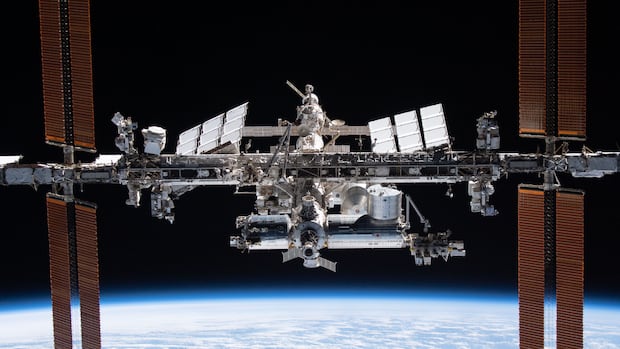
In the upcoming weeks, provided the weather permits, you can catch a glimpse of the International Space Station (ISS) as it passes overhead during the evening hours.
If you happen to spot it, consider giving a wave to Canadian Space Agency astronaut Joshua Kutryk, who is zooming by at a speed of 7.66 kilometers per second.
Kutryk is among seven crew members currently residing and working onboard the orbiting research facility as part of Expedition 75.
Since his arrival at the ISS on October 1, Kutryk has been engaged in numerous experiments and tasks, including a recent cardiac research.
Unsurprisingly, he has also been taking in the breathtaking views.
The ISS frequently becomes visible over Canada as it circles the Earth. However, in the next few weeks, it will be observable during the evening, contrasting with the early-morning sightings that have been occurring lately.
Locating the ISS in the Night Sky
In simple terms, it will appear as a very bright white point — standing out among the many dimmer lights that may be satellites — gliding across the sky. Unlike airplanes, it won’t feature blinking lights and will move in a consistent direction.
-
Joshua Kutryk says he’s ‘having a blast’ on the International Space Station
-
Canadian astronaut Joshua Kutryk conducts his 1st spacewalk
To find out when the ISS will be making its pass overhead, there are several methods available to you.
One option is heavens-above.com, a dedicated website that monitors various satellites and spacecraft. By entering your location, you can locate the ISS alongside other visible objects, and it will present you with a schedule of timings similar to the chart below.
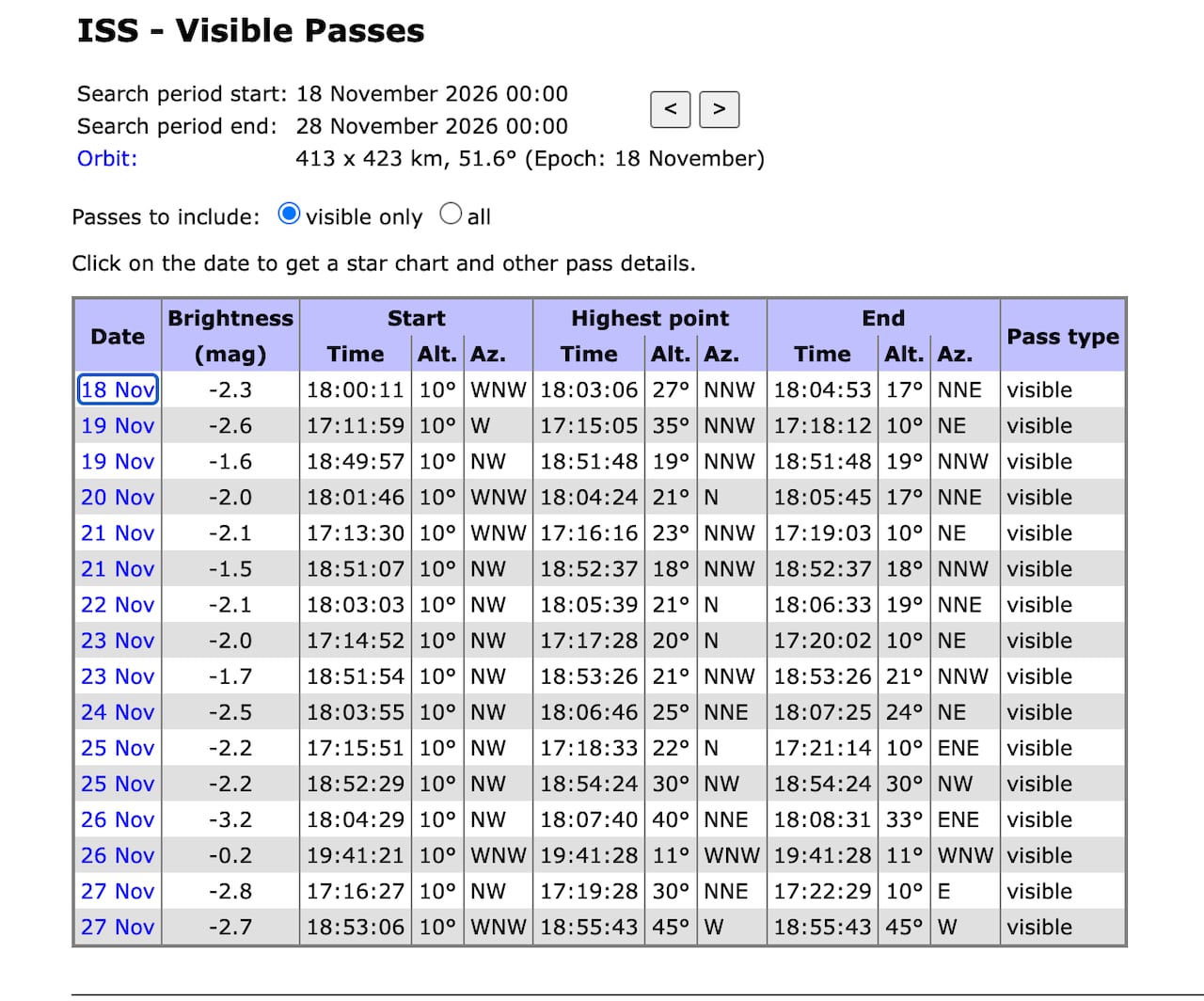
This chart illustrates the times when the ISS will be visible over Toronto in the coming weeks. (Heavens-above.com)
In terms of brightness, a lower negative number indicates a brighter appearance (which may seem counterintuitive, but that’s astronomy for you).
Clicking on the date will reveal a map of the night sky, with a line traversing various constellations, indicating the ISS’s trajectory.
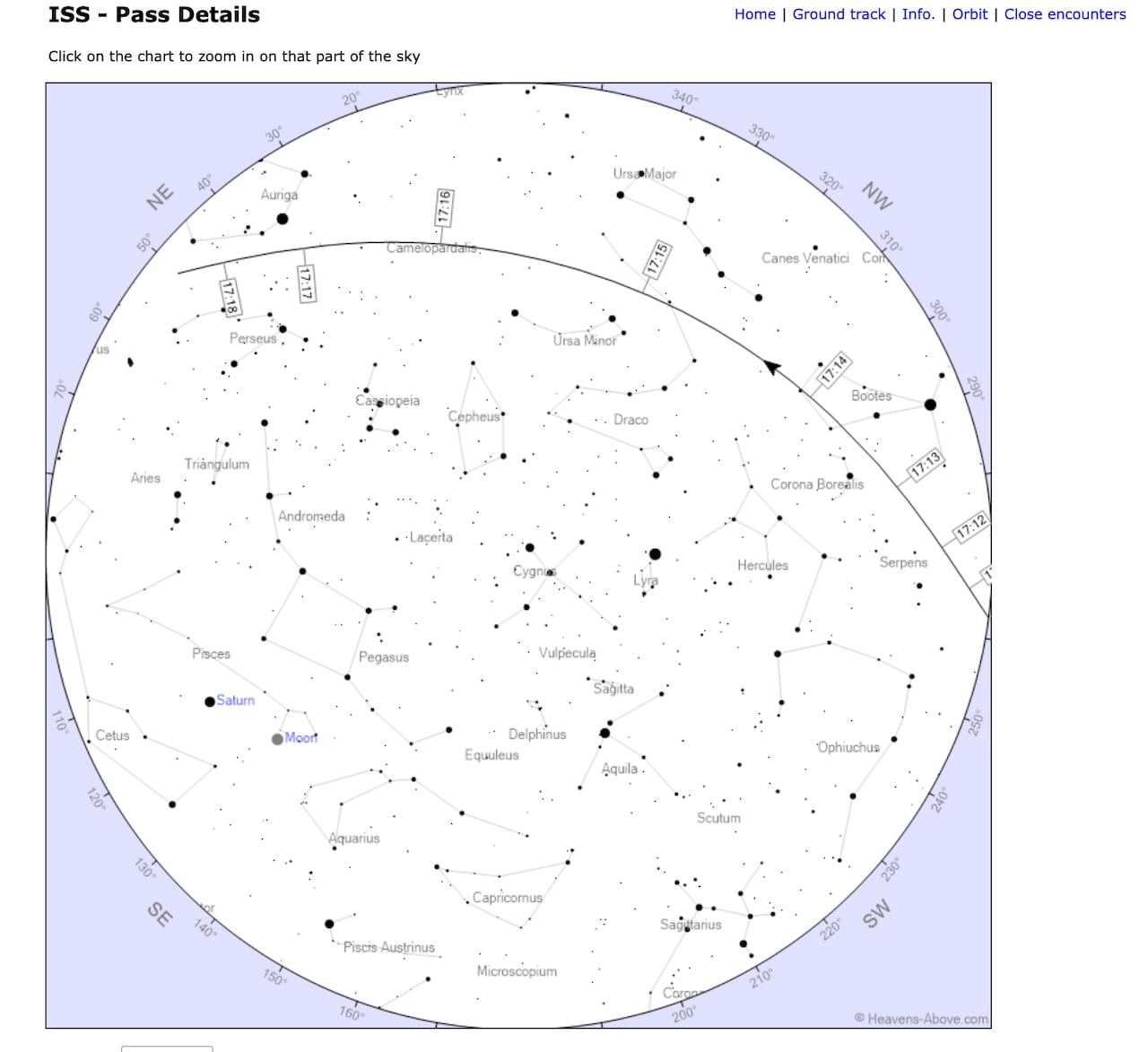
This night sky map depicts the constellations and the route the ISS will follow during this specific pass. (Heavens-above.com)
If the map shows only a short line near the horizon, it may be best to skip that date since the ISS could be harder to spot.
On the other hand, if there is a longer line, it’s worth a shot, provided you have an unobstructed view.
The constellation map will also indicate the local times for the ISS’s visibility, which is extremely useful.
Another excellent tool is NASA’s Spot the Station app.
Upon launching the app, it should automatically identify your location. The home screen will display a countdown to the next ISS pass, while the “Sightings” feature will list upcoming passes.
Additionally, it includes an AR View (augmented reality) feature that provides information about the sky when you point your phone at it — including a line that indicates where the ISS will travel.
If you are able to spot the ISS as it moves across the sky, just think: perhaps Joshua Kutryk is looking back at you.