
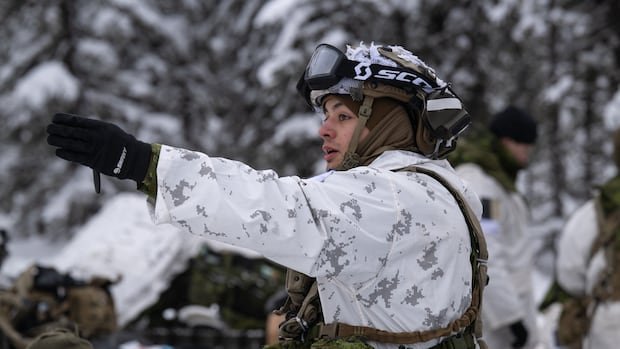
A set of confidential documents from the Department of National Defence reveals that Canadian soldiers were inadequately prepared and at times lacking proper equipment for the extreme conditions they encountered last winter during a significant training exercise with U.S. forces in Alaska. The assessment reports, acquired by CBC News, highlight the need for the military to enhance its capabilities for Arctic defense.
The training session, which involved more than 400 members of the 3rd Battalion Royal Canadian Regiment (3RCR), integrated into a larger U.S. Army brigade during Exercise Global Response in February at the Joint Pacific Multinational Readiness Center, north of Fairbanks, Alaska. The government has committed to maintaining a nearly year-round presence in the Far North, and experts emphasize the importance of troops relying less on technology and more on fundamental skills for combat and survival.
Separate evaluations conducted by Canadian and American authorities outlined various concerns, questioning the readiness of troops and equipment to operate effectively in severe conditions where temperatures plummet below -30°C. The Canadian assessment criticized a recent initiative allowing the purchase of civilian equipment to supplement military cold-weather gear, leading to operational challenges. It highlighted deficiencies in basic winter soldiering skills among certain Canadian units.
Despite the criticism, Lt.-Col. Aaron Corey, the commander of 3RCR, defended the troops’ preparedness, stating that extensive training had been conducted for a year prior to the Alaska deployment. He emphasized that every soldier participating in the exercise was qualified as a cold weather operator and received specialized training in winter operations.
The exercise exposed Canadian soldiers to the complexities of operating in extreme cold, a challenge they have grappled with for many years. The reports acknowledged the harsh conditions faced, with around 30 troops sustaining varying degrees of frostbite. However, the battalion successfully achieved its training objectives during the exercise.
Lessons learned from the training exercise underscored the necessity for troops to adapt to the weather conditions and prioritize safety over speed. The assessment also highlighted the importance of physical preparedness and the ability to adjust to the heavier equipment and increased energy expenditure required in Arctic warfare.
Issues encountered during the exercise included rapid battery drainage in drones due to cold weather and communication disruptions from the lack of satellites in the northern region. The American evaluation pointed out similar challenges faced by U.S. units, emphasizing the need for better preparation, including snow-clearing equipment and adequate fuel supply.
Retired military personnel and defense experts emphasized the need for a return to basic operational principles in the Arctic, citing the unpredictability of the environment and the limitations of technology. They noted that the Canadian military’s historical expertise in Arctic warfare has waned over the years and emphasized the importance of relearning essential skills for operations in the region.
While recent government investments have facilitated increased winter training exercises, experts caution that a shift in mindset and a focus on fundamental Arctic warfare skills are crucial for ensuring effective defense capabilities in the Far North.

