
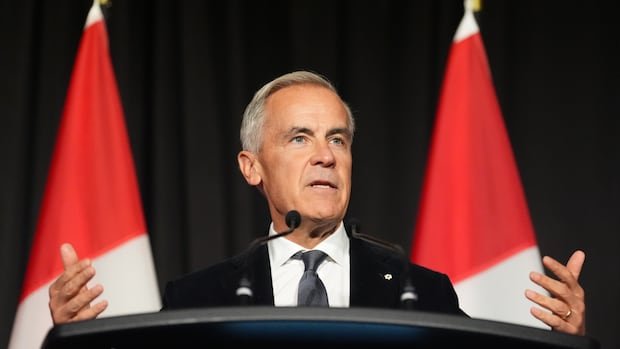
Prime Minister Mark Carney has announced that Canada is set to initiate talks for a distinctive partnership with the European Union, rather than seeking full membership, as he prepares to address the European Parliament. Carney emphasized that Canada is not aiming to join the EU but is exploring the potential for a special alliance, citing shared values and complementary strengths between the two entities.
This development follows a report by the Wall Street Journal, revealing Carney’s efforts to strengthen Canada’s ties with the 27-nation EU bloc without pursuing complete membership. The report suggested a new designation of “associate member” for Canada within the EU framework.
Conservative Leader Pierre Poilievre expressed strong opposition to the idea, asserting Canada’s independence and rejecting notions of becoming an EU member state. A senior Canadian official, speaking anonymously to CBC, disclosed ongoing discussions on enhancing Canada’s relationship with Europe, focusing on the benefits of deeper cooperation rather than the specific label of “associate member.”
Cabinet members have highlighted the importance of diversifying Canada’s economic partnerships, especially in light of escalating trade tensions with the United States. Finance Minister François-Philippe Champagne emphasized the potential of closer ties with the EU, pointing out the EU market’s size compared to the U.S. consumer market.
Carney’s upcoming address to the European Parliament and the planned summit between Canada and the EU in October underscore the growing efforts to forge a unique and forward-looking relationship between the two regions. The EU Ambassador to Canada, Geneviève Tuts, emphasized the mutual desire to redefine and strengthen the EU-Canada partnership beyond traditional cooperation.
Carney is scheduled to speak at the European Parliament later this week and attend the EU summit in France next month, signaling a new chapter in Canada-EU relations.

