

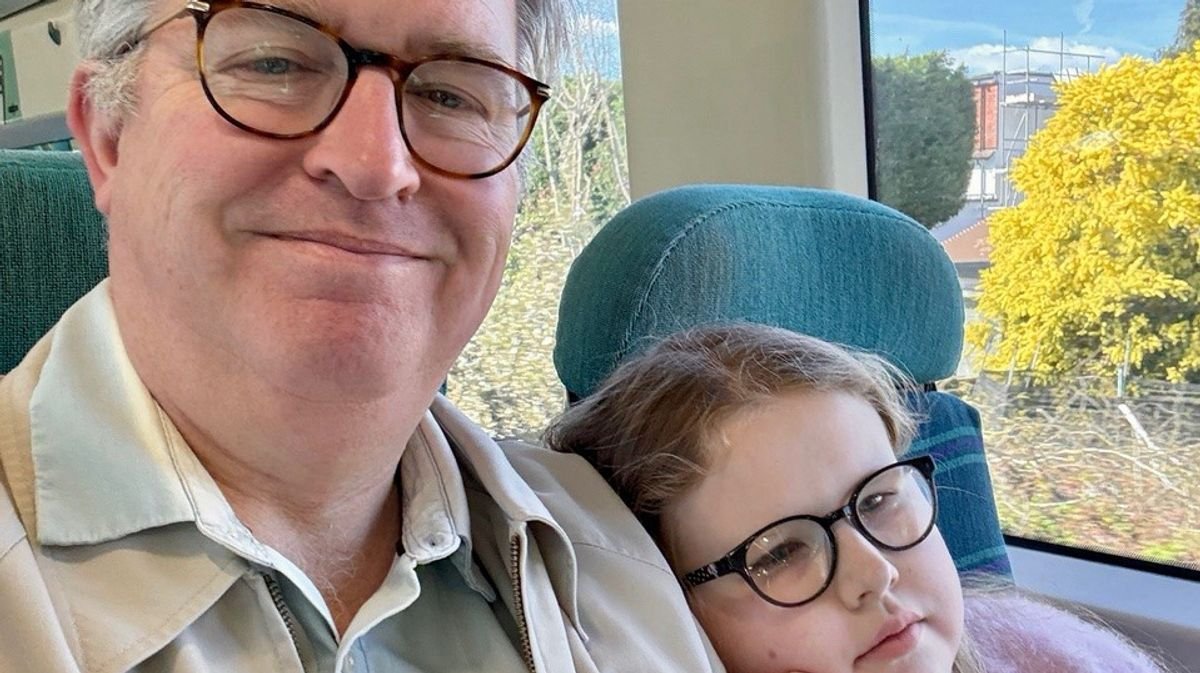
An 11-year-old girl from North Acton, west London, has become the first British individual to undergo groundbreaking gene therapy for Bardet-Biedl syndrome (BBS), a rare condition leading to blindness by early adulthood. Catherine L’Estrange, diagnosed with BBS as an infant, received the treatment involving the direct injection of healthy gene copies into her eye, a procedure previously performed on only one other person globally.
Catherine expressed hope that this therapy would sustain her vision, particularly enabling her to continue reading, one of her favorite activities. BBS, affecting approximately one in 100,000 births in the UK, results in progressive vision loss due to retinal cell degeneration. In Catherine’s case, surgeons replaced the faulty BBS10 gene with healthy copies to preserve her retinal function.
The gene therapy, developed by MeiraGTx, was administered to Catherine at St Helier Hospital in a one-hour procedure. Reverend Timothy L’Estrange, Catherine’s father, emphasized the profound impact this treatment could have on her life by potentially maintaining her vision.
Consultant eye surgeon Neruban Kumaran explained that by introducing a healthy gene copy, the therapy aimed to safeguard retinal cells and potentially stabilize or enhance vision. The therapy’s focus is on protecting vision and instilling hope in patients and their families regarding the preservation of independence.
Identifying eligible patients with the BBS10 gene mutation at a young age, the medical team collaborated with experts from Great Ormond Street and Moorfields Eye Hospital. Catherine’s early diagnosis allowed her family to prepare for her vision loss, progressing from night-blindness to color-blindness and peripheral vision decline.
Catherine’s gene therapy procedure, conducted in one eye, awaits evaluation for outcomes. Similar treatment has been administered to another young BBS patient following Catherine’s case. Initial feedback from patients and families has been positive, suggesting potential improvements in vision, particularly in dim light conditions.
Although the therapy may not restore perfect vision, its goal is to stabilize or enhance visual acuity. Mr. Kumaran emphasized the need for time to fully understand the therapy’s effectiveness, while expressing optimism based on encouraging early responses from patients.
St George’s, Epsom and St Helier Hospitals Group’s chief executive, Mat Shaw, acknowledged the emotional impact of childhood blindness and commended the teams for providing hope to affected children and families. The therapy’s potential to halt childhood blindness and transform the future for individuals with BBS showcases a significant advancement in medical care.

