
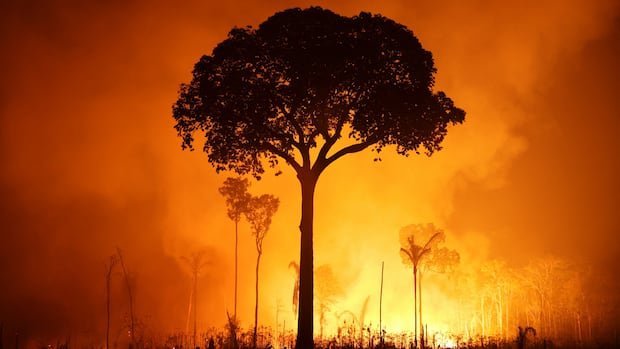
Brazilian authorities are currently probing a potential deliberate ignition of wildfires in the Amazon rainforest, suspecting political motivations ahead of the upcoming second round of presidential elections. Fire occurrences in the region have surged significantly since October 4, following the initial phase of national elections. Senator Flavio Bolsonaro, son of former President Jair Bolsonaro, secured 47% of the vote, while President Luiz Inácio Lula da Silva attained 45%, setting the stage for a runoff on October 25.
Environment Minister João Paulo Capobianco, in statements to The Associated Press, mentioned signs of a premeditated effort to start these fires. During aerial inspections over burned areas, Capobianco and environmental enforcement officials noted fires in protected forest zones arranged in distinct geometric patterns, hinting at possible intentional ignition.
The perpetrators behind these fires and their precise motives remain unclear. The wildfires have notably impacted Amazonas and Para states in recent days, leading to severe smoke disruptions in Manaus, the regional capital. The situation prompted the cancellation of public school classes and advised residents to use face masks for protection.
Local politicians have either taken credit for firefighting endeavors or criticized authorities for their alleged inaction. The fires have also become a focal point of debate beyond the Amazon region, amid an election campaign where environmental issues like forest conservation and climate change have received limited emphasis.
The Amazon’s critical role in carbon storage and weather regulation has been overshadowed by climate change and deforestation, escalating its susceptibility to fires. Human activities, particularly for land clearing purposes, are cited as the primary cause of these ignitions, exacerbated during dry periods. The spike in fire incidents around Manaus, particularly post-election, raises concerns among experts about potential underlying factors driving increased burning activities.
Various factors, including illegal burning practices and retaliatory actions, could explain the recent surge in wildfires within protected areas. With warnings of potentially worsened impacts from El Niño in the upcoming year, authorities and researchers are ramping up efforts to address and prevent further environmental degradation.

