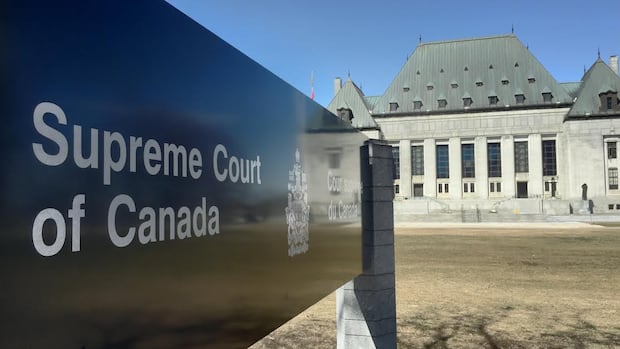
On November 27, the Supreme Court of Canada is set to announce its highly anticipated decision regarding Quebec’s secularism statute, referred to as Bill 21.
In a statement released on Friday, the nation’s highest court indicated that the verdict would be made public at 9:45 a.m. ET.
This ruling is expected to have significant repercussions nationwide, particularly in Quebec, where discussions surrounding the role of religion in public life have persisted for many years. It may also impact the political landscape, especially with the sovereignist Parti Québécois currently leading a minority government in the province.
Bill 21, enacted in June 2019 by the Coalition Avenir Québec (CAQ) government, prohibits public employees, including teachers and law enforcement personnel, from donning religious symbols while on duty.
The legislation faced immediate constitutional challenges, with advocates for civil liberties claiming that it discriminates against Muslim women who wear head coverings.
In April 2021, a judge from the Quebec Superior Court ruled that Bill 21 infringes upon the fundamental rights of religious minorities in Quebec; however, these infringements were deemed acceptable due to the law’s invocation of the Constitution’s notwithstanding clause.
This notwithstanding clause permits governments, including provincial administrations like Quebec’s, to temporarily protect laws from judicial scrutiny regarding fundamental rights breaches.
Justice Marc-André Blanchard’s ruling also stated that the most controversial aspects of the law—the prohibition of religious symbols for various government employees—could not be enforced in English-language schools.
At the time, the CAQ government appealed this ruling, arguing that such an exemption would create divisions within the province along linguistic lines and establish two distinct categories of Quebec residents.
In 2024, the Court of Appeal not only affirmed the majority of the Superior Court’s decision but also rescinded the exception for English-language schools.
The Supreme Court’s hearings occurred in March of this year, during which justices heard arguments from representatives of five other provinces in addition to Quebec.
Multiple organizations are contesting the Quebec law, including the English Montreal School Board, the National Council of Canadian Muslims, and the Canadian Civil Liberties Association (CCLA).
There are nine justices on the Supreme Court. However, Justice Mahmud Jamal, who was involved with the CCLA when it opted to challenge Bill 21 legally, recused himself from the case in July 2024.
To avoid a potential tie in the court’s decision, Alberta Justice Mary Moreau was also removed from the bench.
Since the introduction of Bill 21, Quebec has further advanced its secularism policies, expanding the prohibition on religious symbols to include support staff in educational institutions and childcare workers.
Additionally, the province has enacted legislation limiting public prayer.
The newly established PQ government has also pledged to prohibit children from wearing religious symbols in schools.
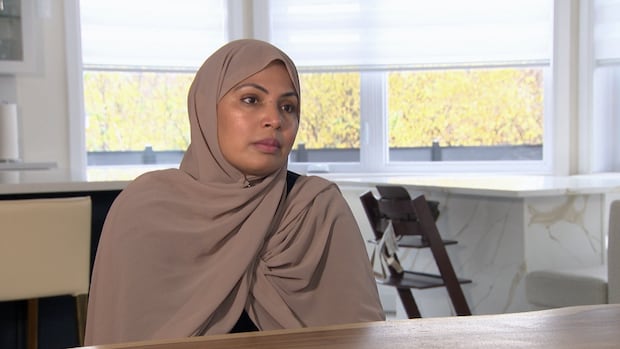
Over the years, Quebec has gradually tightened restrictions on wearing religious symbols in schools for teachers, staff members and parent volunteers. The Parti Québécois has stood firm on its plans to extend that law to school kids, but experts and researchers raise concerns, saying it could lead to marginalization and even dehumanization.