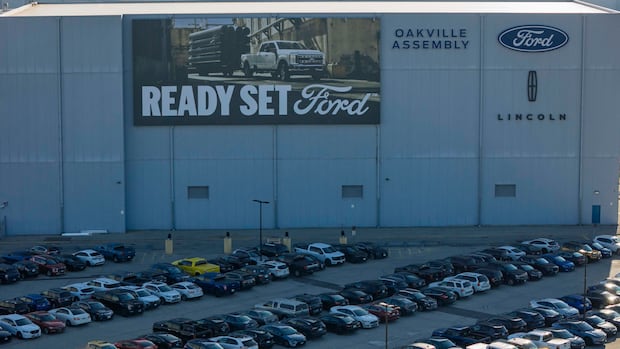
Ford Motor Co. is placing its hopes on its assembly facility in Oakville, Ontario, as a key factor for growth and to showcase the company’s long-term dedication to manufacturing in Canada.
Friday signifies the formal reopening of the site after an extensive renovation aimed at readying it for the production of the F-Series Super Duty pickup truck. This achievement marks the end of two years of construction.
“The scale of the project was absolutely tremendous,” remarked Bev Goodman, the president and CEO of Ford of Canada, during an interview.
“We effectively stripped it down to the bones. Every component that was part of the plant was removed.”
The renovation was part of a $5 billion investment, which also includes funding for Ford’s inaugural stamping facility in Canada. Stamping involves shaping flat metal sheets into designated forms.
A new structure has been erected on previously vacant land, where all truck panels and body components will be stamped. Additional funds have been allocated to Ford’s facilities in Windsor, including the expansion of the Essex engine plant to bolster production of its 7.3-liter engine line.
Ford announced its intention to manufacture Super Duty trucks at the Oakville facility starting in July 2024, stating that this decision would enhance capacity by up to 100,000 units and create nearly 2,000 jobs at the site. The company also produces Super Duty vehicles at its plants in Kentucky and Ohio, but a third location was necessary to “satisfy customer demand,” Goodman explained.
She noted that Oakville was an ideal choice following the cessation of Lincoln Nautilus and Ford Edge production at the site.
“When we invest, we do so with a long-term perspective,” she stated.
“While the future of trade remains uncertain, we recognize that Canada is a crucial element of Ford’s global operations.”
Goodman mentioned that Ford commenced vehicle shipments from the facility two weeks ahead of schedule.
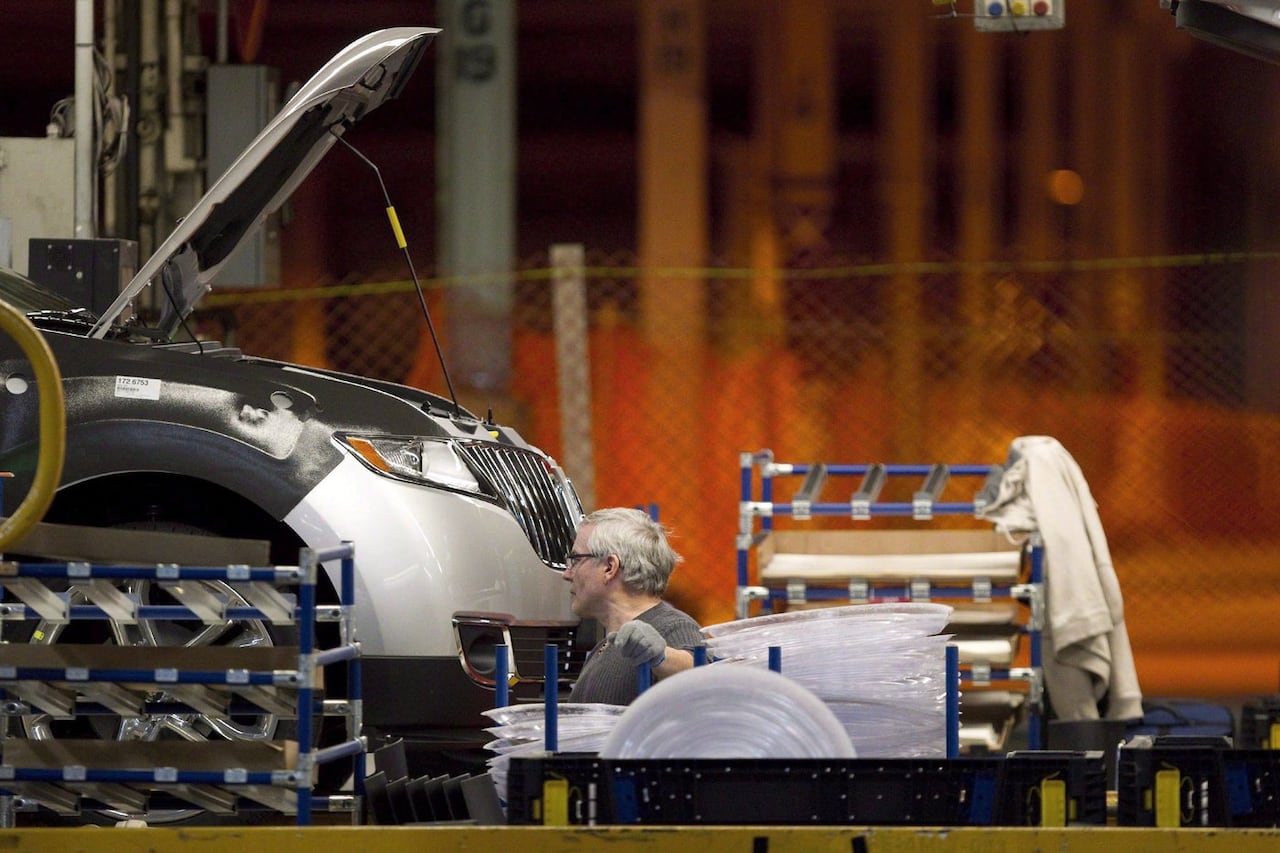
Ford announced its plan to assemble the Super Duty trucks at the Oakville plant in July 2024, saying the move would add capacity of up to 100,000 additional units and create nearly 2,000 jobs at the facility. (Chris Young/The Canadian Press)
On Friday, Premier Doug Ford, federal Industry Minister Mélanie Joly, and Unifor national president Lana Payne were expected to attend the reopening celebration, which follows the ratification of a new collective agreement by Ford employees just a few months ago.
During summer contract negotiations, Payne had commended the retooling efforts, with Unifor choosing Ford as its target for initiating discussions about pattern bargaining in the auto sector. While agreements have been established with Ford and General Motors, negotiations with Stellantis are currently stalled after that company sold its Brampton, Ontario, manufacturing facility to defense contractor Roshel.
“The discussions were highly collaborative,” Goodman said.
The three-year contract features wage increases and job security measures. It also reinstates a no-closure agreement and maintains program commitments across all Ford facilities.
Retool indicates shift away from electric vehicles
The conversion of the site for pickup truck production represents a departure from the original plans to manufacture electric vehicles in Oakville. Ford had previously declared a $1.8 billion overhaul of the facility to transform it into a hub for EV manufacturing, which included the assembly of vehicles and battery packs. The start of EV production was initially set for 2025 but has since been postponed to allow for further development of the consumer market and EV battery technology.
Shifting focus to Super Duty production means some workers will return to their jobs a year earlier than anticipated.
Other automotive manufacturers have also paused their EV plans in Canada due to weak demand.
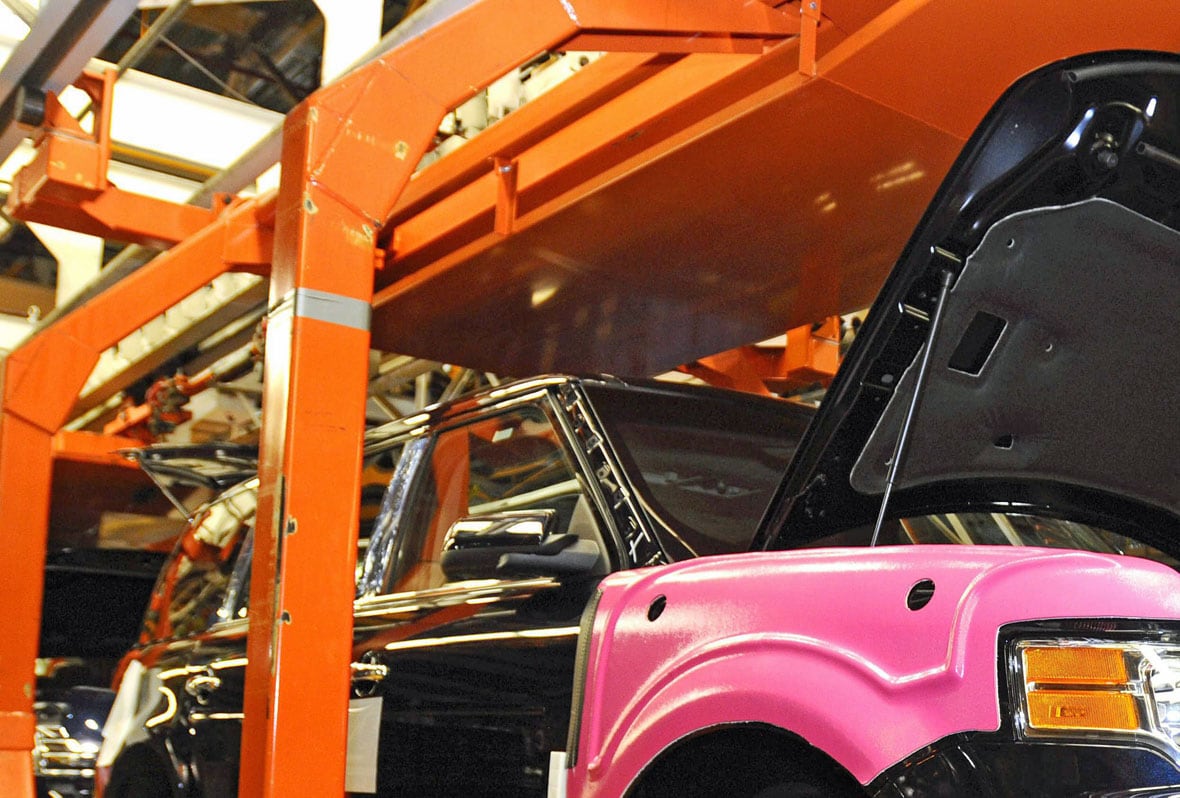
Transforming the site to build pickup trucks marked a shift from initial plans to produce electric vehicles in Oakville. (Sam VarnHagen/Ford Motor Co.)
Earlier this year, Honda Motor Co. halted development on its $15 billion electric vehicle complex in Alliston, Ontario, after pausing those efforts last year to reassess the EV market before making future decisions. General Motors also ceased production of its BrightDrop electric delivery van last year.
Goodman noted that demand for Super Duty trucks remains “surprisingly strong,” as they fulfill “specific needs.”
“They are extensively utilized by our commercial clients, individuals who require their trucks for farming, transforming them into ambulances, or working on construction sites. The marketing strategy for these vehicles is quite different from selling a Bronco Sport to a first-time buyer,” she elaborated.
“Our marketing strategies vary accordingly. We place a strong emphasis on the capabilities of this truck, which is critical for the users of these vehicles.”
Automakers affected by trade disputes with the U.S.
For companies like Ford, recent years have been tumultuous, marked by tariffs and an overarching trade conflict between Canada and the United States.
Prime Minister Mark Carney recently mentioned that trade negotiations with the U.S. are progressing, but Ottawa will not agree to a deal that jeopardizes the viability of the Canadian auto sector. This statement followed Canada’s withdrawal from trade discussions with the U.S. three months ago due to last-minute demands from Washington that threatened the Canadian automotive industry.
Canadian-made vehicles currently face a 25 percent tariff, reduced by any U.S. content. In August, President Donald Trump threatened to increase tariffs on all vehicles, auto parts, and steel from Canada to 50 percent starting January 1.
“Ultimately, this industry is … integrated across North America, as it has been for decades,” Goodman stated.
“This integration enhances our efficiency and enables us to compete against rivals from other markets. Our conversations with governments on both sides of the border focus on advocating for policies that support and strengthen the interconnected North American auto industry, which has thrived for decades, and we need to return to that.”
Ford and other automakers are closely watching new entrants in the Canadian market.
This year, Chinese electric vehicles have begun entering Canada following an agreement that permits up to 49,000 Chinese EVs annually at a tariff of 6.1 percent instead of the previous 100 percent. By 2030, half of these imported vehicles are expected to cost under $35,000 and will comprise less than three percent of the domestic auto market.
“This is certainly on our radar,” Goodman acknowledged, adding that the quota—designed to align with the number of vehicles imported from China in 2023 before tariffs—will help mitigate impacts for now as Ford seeks a “level playing field” as Chinese vehicles enter the market.
“We firmly believe that the government must implement trade policies that protect the long-term competitiveness of our industry,” she emphasized.
“This entails identifying and establishing safeguards to guard against unfair trade practices, alongside clear regulations for connected vehicles to ensure the protection of customer data and privacy, as well as addressing national security concerns.”