
The recent legislation in Alberta mandating oil and gas firms to provide upfront funding for the eventual remediation of each well may appear beneficial at first glance, but its success hinges on effective implementation and enforcement, according to a rancher and advocate for landowner rights.
“It sounds promising on paper,” stated Bill Heidecker, president of the Alberta Surface Rights Federation, on Thursday. “We have numerous questions regarding its practical application.”
The legislation, part of a larger bill introduced on Wednesday, stipulates that companies must make an upfront payment of up to $50,000, followed by annual incremental payments over a ten-year span, with the funds linked to each well regardless of changes in ownership.
These new regulations are anticipated to apply to wells drilled on or after April 1, 2027. The ongoing issue of the thousands of wells that still need proper closure continues to persist.
Heidecker, who operates a cattle ranch near Coronation, Alberta, notes that there are “a couple dozen” wells on his property — some in operation, others not. He described his dealings with the industry as a “constant headache.”
He seeks guarantees that companies will fulfill their responsibilities.
“There are many laws and regulations in place that haven’t been enforced as they should be,” he remarked.

Bill Heidecker is a rancher and the President of the Alberta Surface Rights Federation. We spoke to him to learn more about a new proposal that seeks to hold oil and gas companies more accountable for cleaning up orphaned wells on agricultural land.
He also expressed uncertainty regarding the regulations surrounding energy infrastructure beyond just wells, such as pipelines. Additionally, he seeks clarity on how the costs for well cleanup are determined. Are they calculated based on current expenses or projected future costs? What happens if there are multiple well bores arising from a single pad? How are priorities set for which wells are addressed first?
“We’ve observed that in the current cleanup efforts, companies tend to address the straightforward ones first, leaving the more complex and costly ones lower on the priority list,” he commented.
“While we welcome this initiative, we remain cautious until we see how it unfolds in practice.”
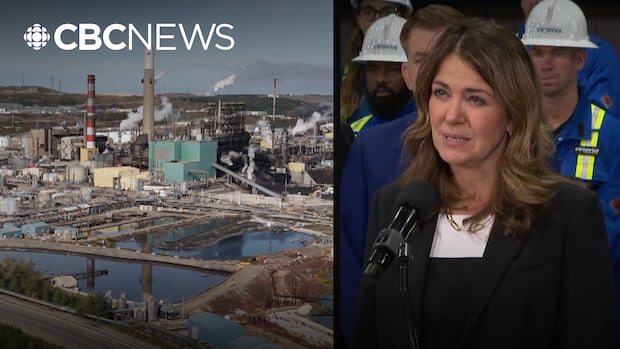
Alberta is introducing new financial incentives to encourage oil companies to increase crude production. The Premier asserts this is essential for supporting the proposed pipeline to the West Coast. However, critics question the necessity of government assistance given the significant profits reported by oil companies. Ina Sidhu reports.
Last week, Heidecker’s organization sent a letter to Alberta’s Premier Danielle Smith expressing their “deep dissatisfaction” with the government’s approach to energy policy and landowner rights, outlining numerous concerns related to both ongoing development and inactive infrastructure. The letter urged landowners to withhold consent for any new oil and gas projects on their properties and to refrain from voluntarily signing new leases.
Despite the province taking a “step in the right direction” with the proposed upfront closure funding, Heidecker stated the call for resistance remains.
“There are many other issues they need to address,” he mentioned, including the absence of strict cleanup deadlines, unpaid municipal taxes, and poor enforcement.
Meanwhile, an environmental think tank provided measured praise for the new initiative.
Amanda Bryant, manager of the oil and gas program at the Pembina Institute, remarked that the new regulations could represent “an important and positive step toward ensuring the industry fulfills its legal obligation to conduct cleanup operations.”
However, she emphasized that for the rules to be effective, they should establish minimum requirements for financial security allocated for cleanup.
“Further action is required to tackle the existing inactive and orphan wells, including implementing enforceable timelines for well closure, imposing fees on inactive wells, or raising the orphan well levy charged to the industry to reflect the magnitude of the cleanup task ahead,” Bryant stated.
- Alberta bill would force oil and gas companies to save money for cleanup of each new well drilled
- Alberta landowners launch legal challenge over amount of money collected to clean up orphan wells
Wells are classified as orphans when there is no legally accountable entity for their cleanup, such as in cases where the owner has declared bankruptcy. These wells fall under the jurisdiction of the non-profit Orphan Well Association, which is financed through an industry fee.
For the 2026-27 fiscal year, the Orphan Well Levy is set at $154.56 million. The well association estimates that total remediation costs for its inventory amount to $1.66 billion. Advocates for landowners argue that the current levy is insufficient to tackle the scale of the existing backlog, raising concerns about the potential health and environmental impacts of improperly managed wells.
Heidecker’s group is involved in a lawsuit initiated in September by landowners contesting what they describe as the Alberta Energy Regulator’s “chronic underfunding” of the Orphan Well Levy, which is determined by the Alberta government based on the regulator’s recommendations.
According to the latest figures released by the Orphan Well Association, there are currently 7,328 wells awaiting decommissioning, which entails the permanent dismantling of equipment to ensure the site is safe. An additional 9,258 sites require reclamation, meaning the land must be restored to a condition akin to its original state.
In the 2025-26 fiscal year, the total expense for both decommissioning and reclaiming a well exceeded $56,000.
Alberta’s energy and minerals minister, Brian Jean, indicated that the financial contributions to the new Resource Asset Closure Assurance and Stewardship Fund are not expected to adversely affect the industry. He estimates that the contributions would represent an initial one percent of the drilling cost per well, along with an additional one percent from the incremental payments made over the following decade.
Jean informed reporters on Thursday that as companies enhance their efficiency and discover ways to reduce costs, “there will be good opportunities for profit.” Under the new legislation, companies can access the funds, which will have accumulated compound interest, once reclamation is completed.
Jean noted that failure to make the deposit means companies will be ineligible to obtain a drilling license.
“It’s a cost of doing business,” he asserted.
“The fact is that this is a very innovative approach. It is a unique strategy — the first of its kind globally — and it will be effective.”