
Justice Minister Sean Fraser informed a committee of Members of Parliament on Thursday that the Liberal government will not separate advance directives from its bill aimed at updating medically assisted dying legislation, allowing MPs to vote on those provisions independently.
Fraser stated, “We have a chance to reduce suffering, which is equally or even more significant than adhering to legislative timelines.”
Conservative members of the justice committee pressed Fraser for clarification on why Bill C-41, which revises medical assistance in dying (MAID) regulations, is being expedited through Parliament without the option for MPs to vote on its two main amendments separately. The bill was introduced in the House of Commons on October 27.
One amendment prohibits individuals suffering solely from mental illness from receiving a medically assisted death, while the other permits those with declining mental capacity to request MAID in advance.
“Why aren’t you dividing the bill? Why are you compelling parliamentarians to address such a complex issue within a timeline that isn’t necessary for advance requests?” questioned Conservative MP Andrew Lawton.
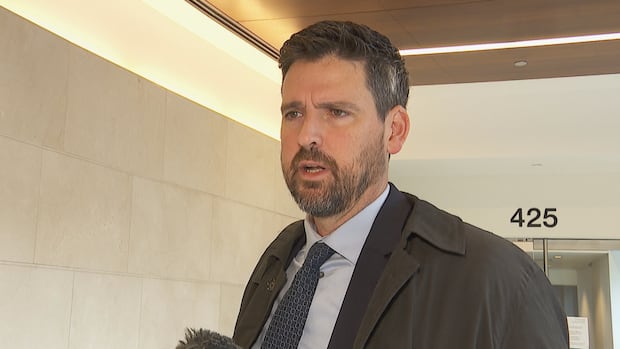
Following discussions among MPs regarding the inclusion of advance directives for medical assistance in dying (MAID) in a bill that will prevent MAID solely for mental health reasons, Justice Minister Sean Fraser stated that the government is incorporating advance directives to help ‘alleviate the pain and suffering’ of Canadians diagnosed with illnesses who may later be unable to pursue MAID due to their deteriorating conditions.
The original MAID legislation was enacted by the government in 2016. However, in 2019, the Superior Court of Quebec annulled the law as it was restricted to individuals whose deaths were “reasonably foreseeable.”
Bill C-7, passed by Parliament in March 2021, eliminated that stipulation, aligning with the court’s decision, while temporarily postponing the extension of MAID to cases exclusively involving mental illness until March 2023.
The mental health provision was subsequently postponed to 2024 and then again to March 2027, meaning that unless Bill C-41 is enacted or the government delays the date once more, MAID will automatically extend to include mental illness in March of the coming year.
Fraser emphasizes the importance of preventing suffering
The amendment permitting individuals to provide advance consent when their illness will ultimately impair their ability to make that choice is not subject to any legislative deadlines.
Fraser explained his choice not to separate the bill, stating, “While there is a legislated timeline regarding the mental illness aspect, I don’t want to imply that the advance request issue is not pressing as well.”
He conveyed to MPs that the decision to maintain both amendments within the same bill was not influenced by medical counsel but rather stemmed from his concern that further delaying advance requests could result in unnecessary suffering.
-
Ottawa to indefinitely extend MAID exclusion for people solely suffering from mental illness
-
Government to reveal next steps for medically assisted dying, justice minister says
“My drive to move forward promptly on this matter is informed by discussions I’ve had with individuals who are enduring suffering,” Fraser stated.
“It is exceptionally painful to engage with someone who understands that their life is nearing its end, compounded by the distress of potentially losing their capacity to make decisions for themselves.”
Proper safeguards in place
Fraser asserted that the issue has been thoroughly examined, and as long as adequate safeguards are established to ensure that advance requests are managed appropriately, the legislation should progress efficiently.
The minister pointed out that Bill C-41 is secure because a physician specializing in the patient’s illness must approve the criteria under which MAID can be administered.
Fraser added that two independent medical assessors must subsequently evaluate whether the criteria established by the expert physician have been met, while also confirming that the individual’s suffering is unbearable and their illness is terminal.
“At that point, the individual would qualify for medical assistance in dying under the proposed framework,” he explained.
He noted that individuals who may no longer recognize themselves or others but appear content and engaged in life would not be eligible, as they are not undergoing intolerable suffering.