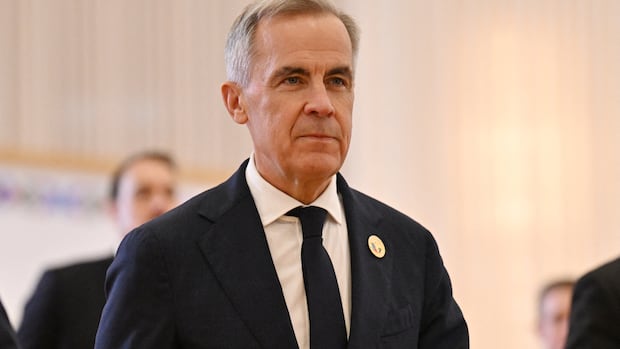
On Wednesday, Prime Minister Mark Carney stated that Canada is open to negotiating a mutually advantageous agreement with the United States. However, if U.S. President Donald Trump is unable to accept those conditions, Ottawa will persist in its current strategy of diversifying its economic partnerships away from the U.S.
While addressing the Dealbook summit via a virtual connection from China during his nine-day trade mission across Europe and Asia, Carney mentioned that Canada faces “a series of issues” regarding trade relations with the U.S.
Despite some advancements, Carney remarked, “we’re not there yet” in finalizing an agreement.
During his visit to China, Carney had a “reasonably direct” discussion with Trump on the sidelines of the Asia-Pacific Economic Cooperation (APEC) summit, although it did not result in any significant trade developments.
With uncertainties surrounding a U.S. trade agreement, Carney noted that negotiations with China have progressed “exceptionally well” and are “very rational.” He has managed to obtain significant market access for Canadian goods in exchange for permitting a limited number of Chinese electric vehicles to be imported at reduced tariff rates.
As part of his tour in Asia, Carney also successfully negotiated two free trade agreements in a single day with the Philippines and the ASEAN bloc, which together encompass a $6-trillion market.
Carney also indicated that Canada is on the verge of finalizing a free trade agreement with India within the next three months.
In total, Canada currently enjoys free trade access to markets comprising around two billion people, a figure that is expected to rise to three billion soon.
“We’d like to do a deal. If the U.S. doesn’t want to do a deal, we’re busy,” Carney concluded.