A judge in Newfoundland has refused bail for a man charged with domestic violence, who reportedly claimed that securing bail in Canada is quite simple.
Zachary Dunphy allegedly followed his ex-girlfriend into a restaurant restroom, yanked her out by her hair, and held her at knifepoint before speeding away at up to 150 km/h.
Following the incident, it is claimed that he sent a message to the sister of the victim stating: “I’ll get bail. This is Canada. She’ll be with me by the end of the day.”
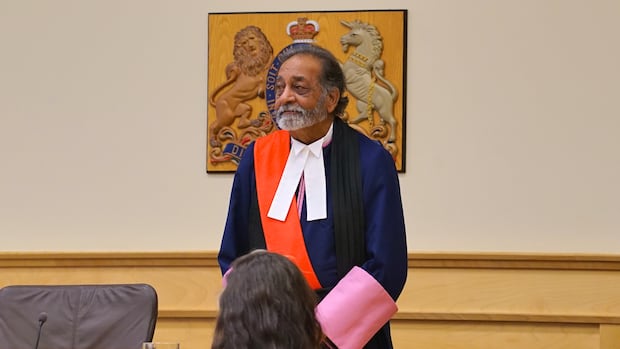
On November 4, Justice Vikas Khaladkar referenced Dunphy’s own statements in his ruling while applying the new regulations under the federal Bail and Sentencing Reform Act.
“Not anymore,” Khaladkar remarked about Dunphy’s perspective on the Canadian legal system.
“This is no longer the Canada that offered recidivist offenders the benefit of the doubt based on the presumption of innocence. There have been too many cases of individuals released on bail who have caused severe harm and death to their intimate partners. That is exactly the risk the Act aimed to eliminate.”
New legislation shifts burden to offenders
The Bail and Sentencing Reform Act, enacted in July, makes it more challenging for offenders facing a wide array of charges, including repeat violent offenders, to secure release.
In these situations, it is now the responsibility of the offender to demonstrate why they should be granted bail, rather than the Crown having to justify why they should remain in custody.
In Dunphy’s instance, the violent character of the alleged crimes and his prior criminal record placed the onus on him to prove his eligibility for release.

Dunphy was first denied bail at the provincial court in May, but he sought a review from the Supreme Court of Newfoundland and Labrador in October, where he was again denied. (CBC)
Dunphy is set to stand trial in March on multiple charges, including forcible confinement, weapon-related assault, choking, dangerous driving, and non-compliance with a probation order. He has pleaded not guilty.
He was initially refused bail at the provincial court level in May, and his subsequent application to the Supreme Court of Newfoundland and Labrador in October also resulted in a denial.
While awaiting his next court appearance, Dunphy allegedly reached out to the complainant, encouraging her to retract her police statements, which she eventually did.
During his time in custody, he also faced charges for attempting to assault another inmate with a broomstick.
The best indication of future performance is past performance.Justice Vikas Khaladkar
Earlier this fall, Dunphy proposed a bail plan that involved living with his parents under surveillance from security cameras on their property. His parents offered to put up $1,000 each, and Dunphy agreed to take medication for his opioid dependency.
Khaladkar rejected this proposal, citing Dunphy’s bold assertions regarding the Canadian justice system and his evident disregard for court-mandated conditions.
“Over the past eight years, the applicant has violated an undertaking or a probation order on 11 occasions,” Khaladkar noted.
“It is evident to me that the best indicator of future behavior is past behavior. Mr. Dunphy has only himself to blame for demonstrating to this court, and others, that he does not comply with the orders placed upon him.”
Khaladkar concluded that there is a clear risk that Dunphy would reoffend if released.
Dunphy is scheduled for trial on March 16-17 at the provincial court in St. John’s. He will remain in custody and must adhere to a no-contact order, preventing him from communicating with the complainant and her family members.
Download our free CBC News app to sign up for push alerts for CBC Newfoundland and Labrador. Sign up for our daily headlines newsletter here . Click here to visit our landing page.