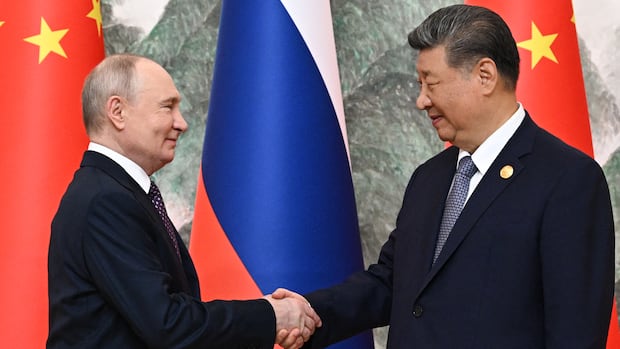
On Wednesday, President Xi Jinping of China committed to opposing trade protectionism, while Russian President Vladimir Putin condemned Western sanctions as both leaders prepared for a crucial trilateral meeting with U.S. President Donald Trump.
Their addresses took place at the Asia-Pacific Economic Cooperation summit in Shenzhen, a southern Chinese tech hub, just hours before Trump arrived in China following meetings with key regional allies in Manila earlier this week.
Xi welcomed Trump at the airport, mirroring the U.S. president’s reception of him at Joint Base Andrews in September during their last encounter. The two leaders shared a brief hug and exchanged pleasantries before proceeding along the red carpet to their motorcades.
They are scheduled to partake in an APEC group photograph and join other leaders for a banquet.
On Thursday, they will meet with Putin informally, likely discussing Russia’s ongoing conflict with Ukraine, the U.S. military involvement in Iran, and other critical issues such as trade, artificial intelligence, and nuclear armaments.
This upcoming meeting has been likened to the 1945 Yalta Conference, where the U.S., Britain, and the Soviet Union established spheres of influence and laid the groundwork for the post-World War II global order, often used to reference significant power negotiations that overlook smaller nations.
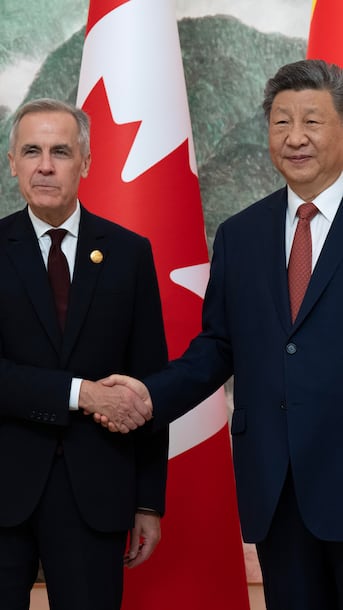
At the Asia-Pacific Economic Co-operation summit, Prime Minister Mark Carney and Chinese President Xi Jinping announced they were loosening trade restrictions between their countries. Some industry groups were pleased, but other experts are urging caution, citing national security risks and China’s track record on rights.
This situation has also caused unease among several European and Asian capitals, which worry that the world’s most formidable military powers may overlook their interests.
An editorial in the Wall Street Journal noted that it was “a sign of Mr. Trump’s unpredictable foreign policy that the [summit] is creating more anxiety among allies than adversaries.”
The Kremlin dismissed the Yalta Conference comparisons this week as “games of political scientists,” but acknowledged that the upcoming meeting will significantly influence global affairs. Beijing asserted that the trilateral talks would foster world peace.
-
Carney to meet with Trump at APEC, says Canada’s trade ties with China are not U.S. president’s top concern
-
Canada and China announce new trade measures and cultural partnerships on Carney’s 1st day in Shenzhen
In his opening remarks, Xi called for support of what he referred to as “free and open trade,” aiming to position China as a reliable partner on the international scene, especially in contrast to the U.S., which has increased tariffs and adopted a more aggressive foreign policy under Trump.
Xi’s comments followed Washington’s announcement of additional restrictions on China’s access to advanced AI chips from companies like Nvidia, potentially complicating an already fragile trade truce with Beijing. China has vowed to retaliate.
“We must firmly uphold the rules-based multilateral trading system centered around the World Trade Organization, support free and open trade and investment, and ensure the stability and smooth functioning of global industrial and supply chains,” Xi stated to an audience of business leaders.
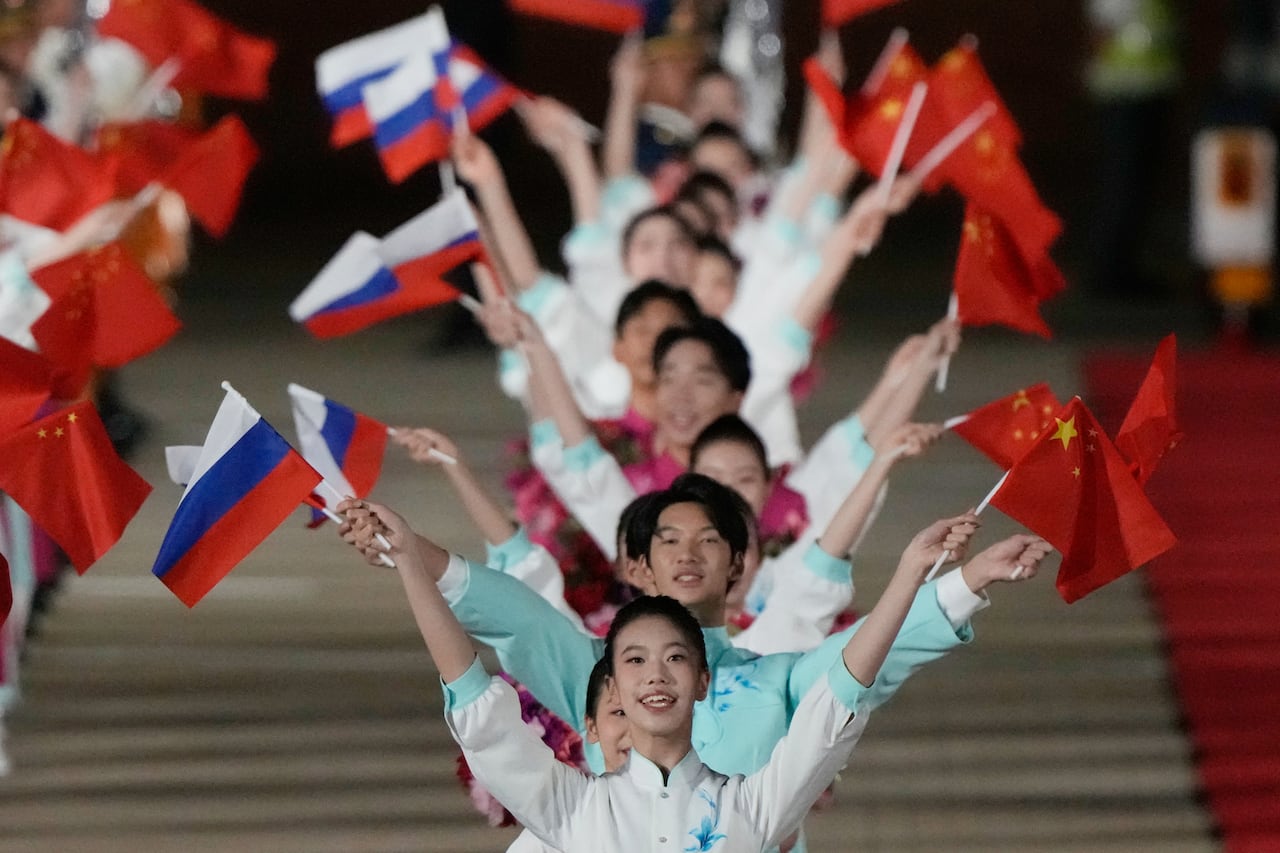
Dancers wave Russian and Chinese flags during the welcoming ceremony for Putin on Wednesday. (Anupam Nath/The Associated Press)
Western trading partners have criticized China for maintaining annual trade surpluses exceeding $1 trillion U.S. due to policies favoring its manufacturing sector at the cost of its consumers.
China argues that this growth model suits an economy that is still striving to catch up with the wealthiest nations, but the U.S., the European Union, and others express concerns that China’s dominance in supply chains grants it geopolitical leverage, threatening their industries and employment.
Xi mentioned that China will persist in investing in its industrial framework and advancing new technologies that would also benefit other nations. He emphasized that the world’s second-largest economy will reduce tariffs and further open its markets while opposing protectionism and unilateralism.
His stance is expected to resonate with many countries in the Global South and reinforces Beijing’s endeavor to differentiate its technology strategy from that of Washington, according to George Chen, a partner and chair of digital practice at The Asia Group.
-
Analysis
How China is positioning itself as a global leader as it hosts Trump, Putin
-
Ukraine cripples Crimean bridge in blow to Putin before meeting with Xi, Trump
Trump’s journey to Asia marks his first since the Republican Party’s losses in the midterm elections, and allegations concerning Nvidia founder Jensen Huang and a suspected Chinese spy contribute to rising tensions.
Trump has downplayed the allegations, having developed a close relationship with Huang over the past two years, and both he and his Commerce Secretary Howard Lutnick have faced scrutiny regarding their awareness of the allegations, especially in light of significant decisions made by the White House regarding export controls on Nvidia chips.
-
No plans to reinstate CEO Jensen Huang, Nvidia chair tells investors
-
Analysis
What the Jensen Huang scandal means for Trump and his administration
Most experts anticipate that Washington and Beijing will maintain a relatively stable relationship, as Trump and Xi are expected to follow their meeting in Shenzhen with their fourth encounter of the year at the Group of 20 summit in Miami this December.
Putin, addressing the audience after Ukraine severely damaged the crucial Kerch road bridge connecting Crimea to Russia, referred to Western nations as “former hegemons” in his speech.
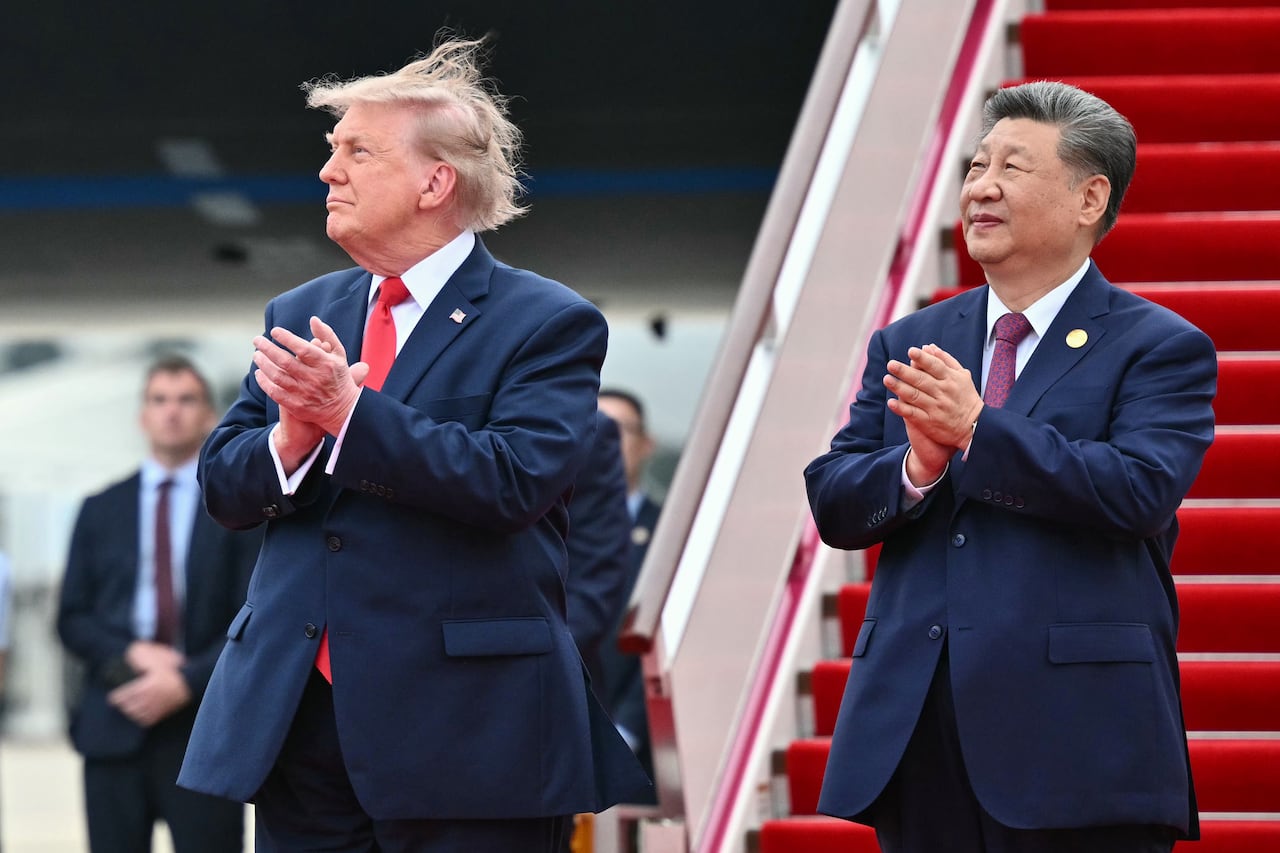
U.S. President Donald Trump and Xi applaud as the U.S. leader arrives at Shenzhen Bao’an International Airport on Wednesday. (Mandel Ngan/Getty Images)
He remarked that Europe is experiencing a “humiliating decline” and asserted that the anti-Russian sanctions enacted after the Ukraine invasion have backfired.
“Experience has demonstrated that the traditional tools of economic dominance and de facto coercion have largely run their course, losing much of their intimidating power,” Putin stated.
“While sanctions, tariffs, and export restrictions may still have some deterrent effect, they are incapable of halting growth — let alone crippling the economies of competitors.”
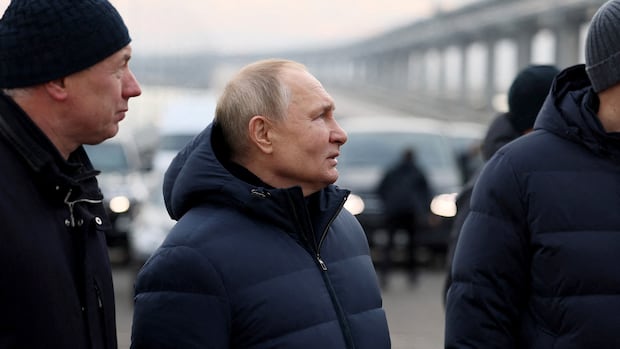
Ukraine’s attack on Russia’s Kerch Bridge in Crimea seems intended to wound Vladimir Putin ahead of his summit with Donald Trump and Xi Jinping, but will it change the course of the war? CBC’s Terence McKenna breaks down how both sides see the bridge, and how Putin might react.
Putin characterized the world as “turbulent,” yet expressed that differences can be resolved by “sitting at the table.”
“Thus, I anticipate significant potential benefits from the upcoming trilateral meeting,” he stated.
On Tuesday, Taiwan and Japan reported incursions by Russian aircraft into their airspace.
During a bilateral meeting later, Xi and Putin commended their strong partnership and committed to further actions that promote a “multipolar world.”
In Manila, Trump pledged to enhance defense cooperation with the Philippines amid rising tensions with Beijing over contested territories in the South China Sea. Earlier, he mentioned the possibility of meeting with North Korean leader Kim Jong Un in China, although this has not been confirmed.