
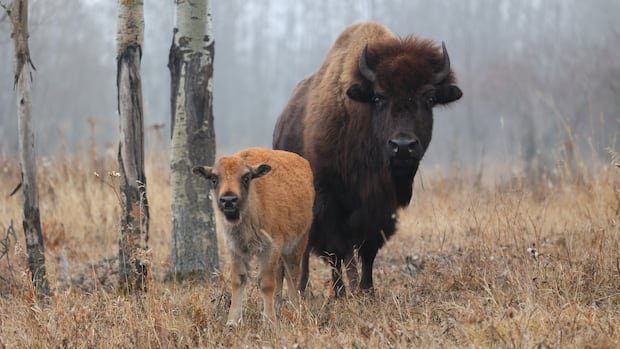
A long time ago, bison roamed freely in vast herds across North America. However, extensive hunting nearly drove them to extinction. New research on bison DNA sheds light on how their populations collapsed and slowly recovered, influencing the genetic diversity of the species.
Published in the journal Science, the study involved sequencing 160 bison genomes over a span of 20,000 years. Led by paleogeneticist Jonas Oppenheimer and the Paleogenomics Lab at the University of California, Santa Cruz, the research engaged nearly 40 scientists, many of whom are Canadian.
The genetic analysis revealed that modern bison herds, once highly connected, are now fragmented and managed in isolated populations. This fragmentation poses challenges to the resilience of the species. Oppenheimer noted that historical bottlenecks caused by human activities led to the current genetic diversity seen in different bison herds.
By comparing ancient bison DNA with that of modern herds, researchers tracked how genetic diversity shifted over time due to population declines. The study found that wood bison and plains bison are genetically distinct, with their divergence dating back around 3,000 years. Recent human interventions, like the relocation of plains bison to Wood Buffalo National Park, caused further intermixing between the subspecies.
The research, which involved sequencing 115 ancient bison genomes and 45 modern ones, emphasized the importance of maintaining genetic diversity and managing bison herds separately. Efforts are underway to preserve the distinct genetic signatures of each herd and prevent inbreeding through strategic matchmaking.
The findings offer valuable insights for conservationists looking to enhance genetic connectivity among bison herds and restore diversity in managed populations. Ultimately, the aim is to help bison populations flourish in their natural habitats and safeguard their genetic heritage for the future.

