
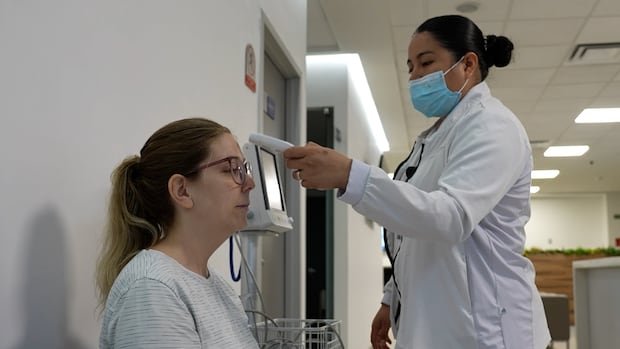
Noelle Menu, aged 37, started experiencing excruciating pain when she decided to have children with her husband at the age of 26. She had been on birth control for an extended period and the pain intensified after she stopped taking it.
The pain became a constant struggle in her life, leading to delays in diagnosis, numerous emergency room visits, a hysterectomy, and being placed on long waitlists to see specialists and receive treatment. Frustrated with the Canadian healthcare system, Menu and her husband opted for private treatment at EndoGlobal in Tijuana, Mexico, spending around $35,000, including travel expenses and accommodation.
Many Canadian women grappling with endometriosis are turning to such alternatives due to their dissatisfaction with the healthcare system. Endometriosis affects one in ten women, and Canada has been criticized for its inadequate care for patients, with the disorder costing the economy billions annually.
The condition involves the abnormal growth of tissue similar to the uterus lining, causing severe inflammation, scarring, and pain during menstrual cycles. Diagnosis in Canada can take up to five years, with significant delays in accessing specialist care and surgeries due to the complexity of diagnosing the condition.
Gender bias and the taboo surrounding menstrual issues contribute to these delays, with many dismissing the pain as a normal part of being a woman. Menu, a supply-chain systems adviser, had to reduce her work hours due to the pain, emphasizing the need for greater awareness and serious consideration of women’s health issues by healthcare professionals.
Dr. Jorge Zavala, a co-founder of EndoGlobal, highlighted the lack of awareness among doctors about endometriosis, leading to prolonged diagnosis times. The complexity of the condition requires a multidisciplinary approach to care, including specialized gynecologists, psychologists, and physiotherapists.
The House of Commons report urged the government to develop a national action plan to address the gaps in endometriosis awareness, diagnosis, and treatment. Statistics Canada is currently collecting data on the condition, while the Canadian Institute of Health Research has allocated significant funds for endometriosis research.
Menu, before her procedure in Mexico, discovered a large mass that could have resulted in a medical emergency had it not been detected. She expressed frustration at the long wait times for specialist appointments in Canada, contrasting her experience with the efficient care she received in Mexico.
With the support of her husband, Menu underwent successful surgery in Mexico, surrounded by other Canadian women who had also sought treatment there. She expressed immense gratitude for the care she received and her relief at finally being free from the debilitating effects of endometriosis.

