
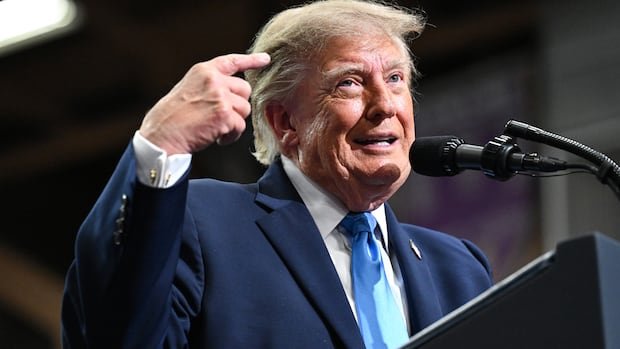
The upcoming midterm elections are shaping up to be a critical moment for U.S. President Donald Trump and the Republican Party, which he has led for the past decade. Recent polls indicate a potential wave of support for the Democrats among voters who previously would not have considered the party.
Many American voters are showing signs of disillusionment with Trump, who pledged lower prices and an end to foreign conflicts but instead faced criticism for higher prices and military actions, such as the war on Iran during his second term. Inflation levels have surged compared to the start of his second term, further impacting consumer sentiment.
Experts argue that Trump’s tariffs have exacerbated affordability issues, with some suggesting that prices might have even decreased without them, aligning with earlier economic predictions. Trump’s approval ratings have plummeted, with one analyst comparing his unpopularity to that of Herbert Hoover, a historically criticized Republican president.
In an effort to boost support, Trump has resorted to “gimmicks,” including proposing $5,000 checks for every adult if the Republicans secure victory in the midterms. Some Republican candidates, however, are distancing themselves from Trump due to his controversial policies, such as the trade war with Canada.
Recent data shows a significant shift in voter identification, with more Americans now leaning towards the Democratic Party. While Trump retains strong support within his base, Republicans are urged to address the enthusiasm gap as Democrats display higher motivation to vote. The Republicans hold a substantial financial advantage, with Trump amassing a substantial campaign fund that could influence the election outcome.
Despite efforts to gerrymander electoral maps in their favor, Republicans are facing challenges in maintaining control of the House of Representatives and possibly the Senate. Traditional Republican strongholds like Kansas and Texas are now competitive, with Hispanic voters in Texas showing a notable shift away from the party. Economic factors, such as inflation and trade policies, are influencing voter decisions in key states.
As the midterm elections draw closer, the landscape appears uncertain, with Democrats potentially poised for substantial gains. Trump’s recent campaign visits to various states signal a changing political landscape, with the potential for a significant shift in power.

