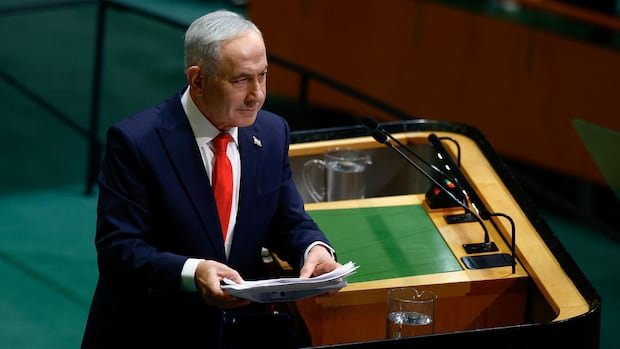
A review of Israeli Prime Minister Benjamin Netanyahu’s flight patterns over the past two years reveals a consistent use of Canadian airspace when traveling to the United States, despite Canada’s commitment to enforce an international arrest warrant against him. This practice has raised criticism, with concerns that Canada’s actions undermine its stance in support of international law.
European countries exhibit varied approaches regarding the enforcement of arrest warrants in sovereign airspace. France, like Canada, has allowed Netanyahu to pass through its airspace but has stated that the obligation to enforce International Criminal Court (ICC) warrants does not extend to overflights. The French Foreign Ministry clarified that the Rome Statute, governing the ICC, does not mandate actions regarding overflights by aircraft carrying individuals targeted by arrest warrants.
While France openly outlined its interpretation of obligations under the Rome Statute, countries like Italy and Greece have permitted Netanyahu’s overflights without disclosing their legal reasoning. In contrast, the Canadian government’s stance has been somewhat ambiguous, with a statement from the Prime Minister’s Office suggesting that Canada’s law enforcement objectives are not necessarily tied to airspace permissions.
The debate among international law experts revolves around whether the Rome Statute covers airspace. Netanyahu’s flight data indicates heightened caution in late 2025, with detours taken to avoid certain European airspace regions. Some countries, such as Slovenia and Turkey, have explicitly closed their airspace to Netanyahu, while others like Spain have not declared a ban but have witnessed detours by the Israeli leader’s aircraft.
In 2024, the ICC issued an arrest warrant against Netanyahu for alleged war crimes, a charge refuted by the Israeli government. The shifting explanations from various governments, including Canada, have prompted questions about their support for the ICC and international law.
Despite concerns raised by experts like Ardi Imseis from Queen’s University, who asserts that Canada’s allowance of Netanyahu’s flights violates its obligations under the Rome Statute, the Canadian government has emphasized respecting diplomatic engagements such as the United Nations General Assembly in justifying airspace permissions.
The complexities surrounding Netanyahu’s flights underscore broader issues concerning international law and the role of countries in upholding justice. Experts like Errol Mendes emphasize the importance of defending the ICC and preventing attempts to undermine its authority, stressing the potential ramifications of inaction on global justice efforts.