
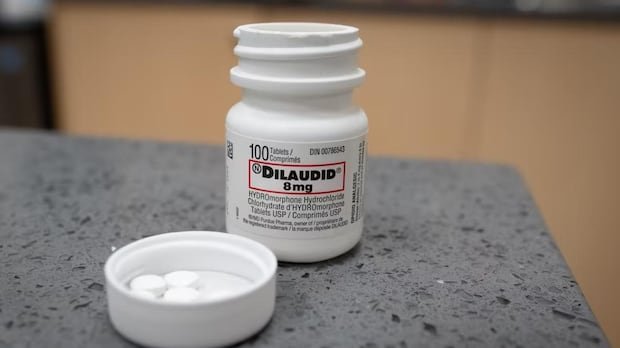
In a push for stricter rules on prescribing safer-supply drugs in Ontario, concerns have been raised by police over the rise in diverted prescribed opioids. Doctors are also advocating for enhanced regulations surrounding safer-supply prescribing. Dr. Robert Cooper, a Toronto and Orillia-based physician and board member of Addiction Medicine Canada, highlighted the organization’s formation in response to what its members view as inappropriate short-acting opioid prescriptions for individuals with addiction issues.
While Dr. Cooper does not endorse safer-supply prescribing, he acknowledged the beneficial wraparound support provided by federal government-funded programs that have since ceased operations. These programs offered crucial assistance such as linking individuals to housing resources and mental health services.
Safer-supply prescribing, which gained momentum amid the escalating overdose crisis during the COVID-19 pandemic, involves administering legal opioids in tablet form to patients. The primary aim is to deter individuals from obtaining potentially hazardous illegal drugs from various sources, which may contain harmful additives, as seen in the recent spike of over 60 drug poisonings in the Kenora area.
Dr. David Marsh, vice-president of research and graduate studies at Northern Ontario School of Medicine University, emphasized the varied models of addiction care and treatment encompassed by safer supply. He was involved in pioneering heroin prescription trials in Canada in the early to late 2000s, drawing from successful practices in European countries that have adopted safer-supply prescribing as standard treatment.
Health Canada commenced funding 31 programs nationwide in 2020, offering prescribed opioid alternatives along with wraparound supports like mental health and housing assistance. However, these programs lost funding in 2025. Dr. Marsh underscored the need for a comprehensive approach to address addiction concerns while acknowledging the potential risks associated with certain alternatives.
In Ontario, prescribing guidelines fall under the purview of the College of Physicians and Surgeons (CPSO). While physicians across the province can prescribe opioids as an alternative to street drugs for individuals battling addiction, British Columbia stands out as the sole province with a formal government-endorsed framework for safer-supply prescribing, mandating supervised consumption of safer-supply medications.
Advocating for changes in safer-supply prescribing protocols in Ontario, Dr. Cooper emphasized the importance of observed dosing and capping the quantity of prescribed medications to mitigate diversion risks. The CPSO recently updated its prescribing policy to provide clarity on expectations surrounding safer-supply prescribing, requiring in-person assessments and periodic evaluations for ongoing prescriptions.
The debate on safer-supply prescribing continues to evolve, with ongoing discussions among physicians and regulatory bodies. The CPSO is set to convene on October 13 to deliberate proposed amendments related to safer-supply prescribing, aiming to strike a balance between patient care and public safety.

