
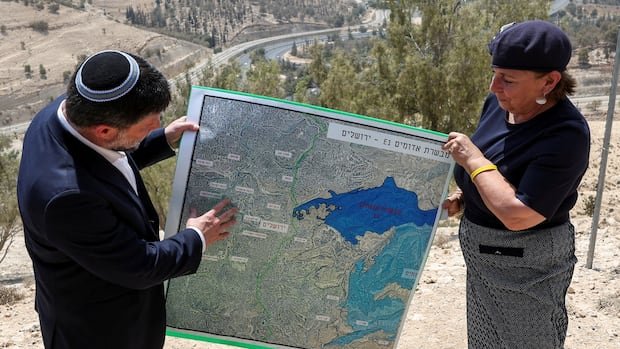
The Israeli government is moving forward with a controversial plan to expand settlements in the occupied West Bank, a move criticized for jeopardizing the potential for a future Palestinian state. According to rights group Ir Amim, Israel is set to open bids for 2,167 additional housing units in a project that would effectively split the West Bank into two parts.
This new tender is in addition to a previous announcement for 1,234 units, bringing the total number of housing units to 3,401. The planned development in the E1 area near Jerusalem has drawn significant opposition due to its potential to fragment the West Bank and isolate it from East Jerusalem.
The United Nations and many countries consider these settlements illegal under international law. However, Israel disputes this classification, referring to the area as “disputed” rather than occupied. The E1 project, which has been pending for over twenty years, is now being revived despite past freezes under U.S. pressure.
The bidding process for the new units is scheduled to commence on October 25, just two days before Israel’s upcoming parliamentary election. The government’s decision to push forward with the settlement project ahead of the election has raised concerns about creating an irreversible reality on the ground. This move comes shortly after Canada, Britain, and France imposed bans on exports from Israeli settlements in the West Bank.
Critics, including Palestinian President Mahmoud Abbas, have condemned the expansion of settlements as a violation of international law. Israeli Finance Minister Bezalel Smotrich, known for his nationalist views, has been vocal in supporting the plan, despite facing sanctions from multiple countries for his controversial statements and actions.
Peace Now, a group monitoring settlement growth, has warned that the project poses a severe threat to the prospects of a peaceful two-state solution. The organization’s concerns are echoed by British Foreign Secretary Ed Miliband, who has denounced Israel’s actions in the E1 project as detrimental to peace and stability in the region.
A recent report by Israeli human rights group B’Tselem accuses the Israeli government of systematically dismantling Palestinian existence through various measures, including violence, movement restrictions, economic pressure, social disruption, and territorial control. The report suggests that these policies have intensified under the current government, leading to increased settler violence and territorial expansion in the West Bank.
The situation in the West Bank has escalated, with a record number of settler-related incidents causing casualties and property damage. B’Tselem describes the current reality as part of an ongoing project of elimination within the Israeli apartheid regime, driven by a settler-colonial logic of displacement and sovereignty establishment.
Israeli officials have refuted accusations of apartheid and systematic dispossession, attributing their policies to security concerns and historical claims to the region. Despite international criticism and calls for restraint, Israel continues to advance its settlement agenda in the West Bank.

