
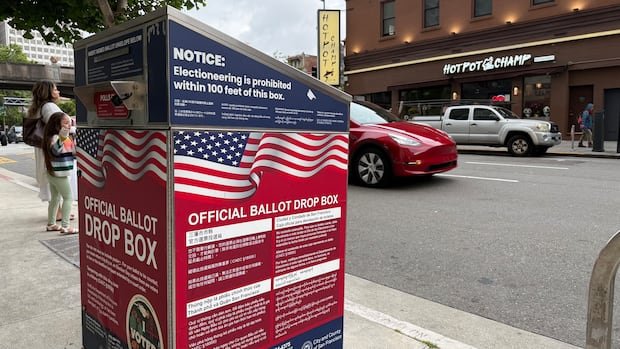
Over the past few months, President Donald Trump of the United States has been pushing for new limitations on mail-in voting, a method utilized by about one-third of American voters during elections. However, with the critical midterms drawing closer in less than seven weeks, the U.S. Supreme Court has blocked a Trump administration initiative that could have prevented millions of people from casting their votes via mail. Here is a breakdown of the situation.
Significance of Mail-In Voting in the U.S.
Large numbers of Americans opt for mail-in ballots in both presidential and midterm elections. The percentage of Americans voting by mail saw a gradual increase during the 2010s, reaching 25% in 2018, and then significantly rising to 43% in 2020 due to the COVID-19 pandemic. In the 2024 presidential election, around 30% of the 158 million votes cast were through mail-in ballots, as per the official report by the U.S. Election Assistance Commission. These figures surpass the proportion of mail-in voters in federal elections in Canada.
While a report by Elections Canada reveals a record 1.25 million individuals voted by mail in the 2025 general election using special ballots, this constituted only 6.3% of the nearly 20 million total ballots cast across the country.
Trump’s Concerns with Mail-In Voting
President Trump criticized states that expanded mail-in voting access for the 2020 presidential election and baselessly claimed that fraud led to the election being stolen from him, with mail-in voting at the center of his grievances. Research by the Brookings Institution indicates that mail-in voting fraud is extremely rare, occurring in about four cases per 10 million mail-in ballots. Trump’s contentions have mainly focused on unproven allegations that mail-in ballots facilitate illegal voting by non-citizens and aid the Democrats in winning elections.
Demographics and Mail-In Voting
While millions of registered Republicans, including Trump, have previously chosen to vote by mail, there is evidence suggesting that limiting mail-in ballots could benefit Republicans in closely contested congressional races and swing states. Studies by the MIT Election Data Lab and the Pew Research Center indicate that in 2020 and 2024, registered Democrats were more inclined to vote by mail than registered Republicans, although this gap narrowed in the latest presidential election. Elderly Americans aged 65 and above are the demographic group most likely to opt for mail-in voting.
Trump’s Attempt to Restrict Mail-In Ballots
Trump’s plan sought to grant the U.S. Postal Service, a federal agency under the administration’s control, the authority to determine voters’ eligibility to receive mail-in ballots. This would have deviated from the U.S. voting system, where states manage elections. In March, Trump issued an executive order instructing the Department of Homeland Security and the Social Security Administration to compile lists of eligible voters. Subsequently, the postal service would send ballots solely to those on the lists and establish a tracking system for mail-in votes.
The plan also aimed to compel states to redesign their ballot packages to meet new postal service requirements, which many states deemed unachievable in time for the election, potentially disenfranchising mail-in voters. Led by California, states challenged this plan legally, resulting in a federal court judge issuing a series of injunctions. In an emergency ruling on Monday, the Supreme Court rejected the administration’s appeal to lift the injunction.
Trump’s Reaction to the Ruling
In a lengthy post on his Truth Social platform, Trump criticized the court’s decision regarding mail-in voting, labeling it a “CORRUPT and out of control Mail-In voting ‘disaster’ that is a laughing stock worldwide.” He condemned the ruling as terrible, claiming it facilitates cheating and accused the court of making harmful decisions in the country’s history. All three justices appointed by Trump in his initial term on the court opposed the administration’s application in this case.
Future Implications
While the Supreme Court ruling seems to clear the path for normal mail-in voting in the upcoming midterm elections in November, Trump is likely to continue addressing this issue. If Republicans lose control of the House or Senate in the midterms, concerns have been raised by voter advocacy groups that Trump may cast doubt on the election results. Attorney General Todd Blanche emphasized that the administration’s efforts to restrict mail-in voting aim to safeguard the integrity of the electoral process and will persist beyond November.
<a href="https://www.cbc.ca/news/world/trump-voting

