
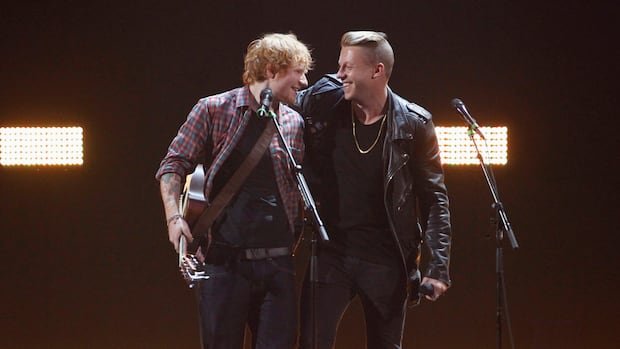
After criticism arose over Macklemore’s removal from his tour as an opener due to his pro-Palestine remarks, singer Ed Sheeran has clarified that the decision was not his own and defended his choice to remain apolitical.
Sheeran expressed his dismay at the Israel-Palestine conflict, labeling the suffering on both sides as a human tragedy. Following his performances at New Jersey’s MetLife Stadium, upcoming venues informed Sheeran that they would cancel his shows unless Macklemore, 43, was removed as the opening act due to the manner in which he conveyed his message during performances.
Videos from the shows, which have faced criticism from pro-Israel groups, captured Macklemore chanting “Free Palestine” to an enthusiastic crowd and expressing solidarity with Palestinians in Gaza and the Israeli-occupied West Bank. In a speech during the second show, he reassured Jewish audience members that criticism of Israel and apartheid does not reflect criticism of them but rather advocates for peace, love, dignity, respect, and equality for all.
In response, Sheeran clarified that the decision to remove Macklemore was made by the promoter, not him, and despite his attempts to mediate, the venues remained steadfast in their stance. Meanwhile, Macklemore emphasized the importance of truth-telling and expressed disappointment in Sheeran’s reluctance to take a stand on the issue.
During his performance, Macklemore showcased images of the devastation in Gaza while singing his song, “Hind’s Hall,” which addresses pro-Palestinian student protests and the tragic story of Hind Rajab, a child killed by Israeli forces in Gaza. International bodies such as Amnesty International and a United Nations commission have labeled Israel’s actions in Gaza as genocide, a claim denied by Israel.
The controversy surrounding Macklemore’s removal shed light on the challenges faced by artists who speak out on the Gaza issue, with some facing repercussions in their careers. Despite the backlash, Sheeran’s tour will proceed without Macklemore, concluding at Raymond James Stadium in Tampa, Florida, where Kanye West performed earlier this year despite calls for cancellation over his history of antisemitic remarks.
The incident has sparked discussions on the complexities faced by artists when navigating political issues, highlighting the delicate balance between personal beliefs, public image, and social responsibility.

