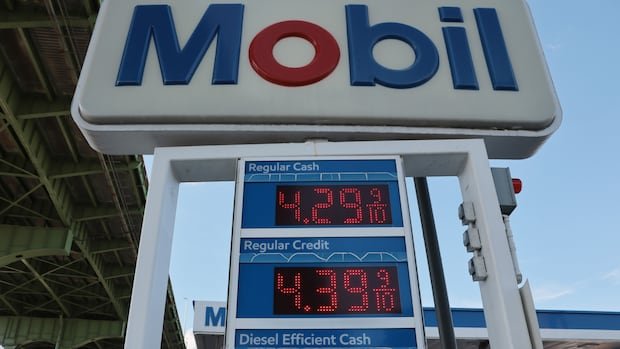
Canadians have been impacted by the tariffs imposed by U.S. President Donald Trump on Canadian products, amounting to about $27.6 billion. However, the turmoil in the Iran war has inadvertently led to a financial boost for the Canadian economy, as funds from U.S. consumers spent on gas are flowing into Canadian coffers.
This influx of money, driven by the oil sector where Canada supplied over 60% of crude oil imports to the U.S. last year, is expected to offset tariff losses and potentially surpass them.
Following a period of falling oil prices due to reduced tensions in the Gulf, recent escalations have caused oil prices to surge again, with Brent crude reaching nearly $110 US per barrel.
While Canadian consumers are feeling the effects of fluctuating oil prices, the resulting profits are anticipated to bolster the economy, potentially negating the impact of Trump’s tariffs, with some provinces even foreseeing a shift from deficits to surpluses.
Trouble in the Gulf
The recent seizure of strategic locations by the Houthi rebels, Iran’s allies in Yemen, threatens maritime routes crucial for Saudi oil exports, particularly the Bab al-Mandab strait. This development has raised concerns about the flow of Saudi oil to global markets.
With ongoing conflict affecting Saudi oil infrastructure and the closure of key trade routes, the global oil market is facing disruption, impacting various countries’ economies.
Benefits for Canada
As oil prices surged past $100 US per barrel, the Canadian oil industry experienced significant gains, contributing to a boost in profits and economic outlook. The rise in oil prices is projected to benefit not only the oil industry but also the overall Canadian GDP and government revenues.
Provinces like Alberta and Newfoundland and Labrador have seen a turnaround in their financial situations, with unexpected oil windfalls helping to offset deficits and drive economic growth.
Potential Offsetting of Tariffs
The increase in oil prices could potentially counterbalance the impact of tariffs on the Canadian economy. While tariffs affect a significant amount of goods, the surge in oil prices is expected to contribute substantially to the GDP, potentially offsetting tariff-related losses.
Moreover, the rise in oil prices could lead to long-term investments and diversification in the energy sector, benefiting various industries and regions in Canada.
Future Outlook
Despite assurances of falling oil prices, market indicators suggest that oil prices will remain high, presenting both challenges and opportunities for Canada and other economies. The ongoing conflicts and uncertainties in the oil market highlight the need for strategic planning and diversification in the energy sector.
Overall, the current geopolitical landscape and oil market dynamics are shaping the economic outlook for Canada and other nations, emphasizing the interconnectedness of global events and their impact on various industries and economies.