
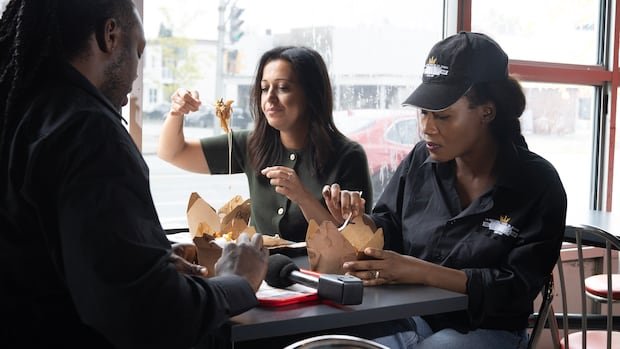
Quebec’s election campaign saw Ruba Ghazal, a co-spokesperson for Québec Solidaire, making a notable stop at Chez Morasse, a poutine restaurant in Rouyn-Noranda, Que. Ghazal engaged with customers, highlighting her party’s focus on addressing the high cost of living, housing issues, and improving education.
Joining the local QS candidate, France Marion, Ghazal enjoyed a large serving of poutine and expressed her delight with a hearty “J’adore.” This act of mingling with voters over a meal is a common tactic during election campaigns, as stated by political analyst Antonine Yaccarini.
Christine Fréchette, the leader of Coalition Avenir Québec, also followed suit by visiting Ti-Oui Snack Bar in Saint-Raymond, serving customers and emphasizing the cultural significance of poutine and casse-croûtes in Quebec.
Yaccarini emphasized the strategic selection of campaign stops, such as restaurants and public markets, to reach targeted ridings and create appealing visuals. Food columnist Charles-Alexandre Théorêt described election campaigns as a form of “seduction operation,” where sharing food helps politicians appear relatable.
Food has long been used to shape politicians’ images, with historical instances like Quebec Premier Robert Bourassa’s hotdog-eating portrayal. However, culinary campaign stunts can backfire, as seen in Conservative Leader Pierre Poilievre’s pizza mishap during the 2025 federal election.
Théorêt highlighted the importance of cultural awareness, citing examples like Liberal Leader Mark Carney’s slip-up with cheese curd sounds in Shawinigan. Authenticity in embracing cultural symbols, like poutine, can send a strong message to voters, although insincerity can undermine the intended impact, according to Yaccarini.

