

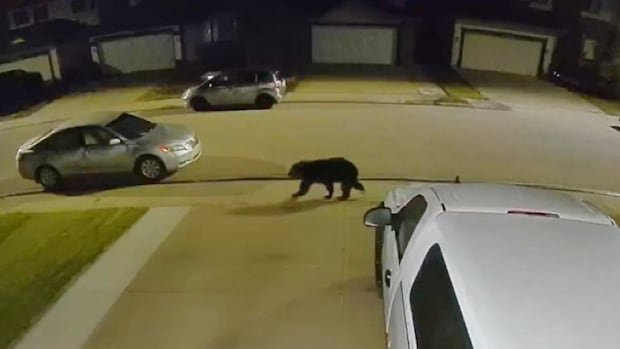
A black bear was sighted wandering the streets of northwest Edmonton, with experts suggesting it was likely searching for food before winter sets in. The bear was observed leisurely strolling along a residential sidewalk in the Cumberland neighborhood during the night.
A resident, Ken Turner, captured the bear on his home security camera around 1:30 a.m. near 138th Street and 149th Avenue and promptly notified the authorities out of concern for public safety. Ecologist and University of Alberta professor Mark Boyce mentioned that while it’s not uncommon for bears to be seen in Edmonton, it is still an intriguing occurrence.
Fish and Wildlife Enforcement Services confirmed they were aware of the black bear in the area following reports from Edmonton police of multiple sightings between midnight and 1:30 a.m. No aggressive behavior or property damage was reported, and the bear has not been spotted again since then.
As black bears enter their peak feeding season, they may venture into urban areas in search of food. Residents are advised to remove any potential attractants from their properties and report any further sightings to wildlife officials directly.
According to Boyce, Edmonton is surrounded by ideal bear habitats, and it’s common for bears to move into urban areas through wildlife corridors like the North Saskatchewan River Valley. With around 40,000 black bears in Alberta, some are expected to navigate into urban settings.
The bear was likely driven by hunger, as this time of year marks a period of voracious eating known as hyperphagia before their winter hibernation. Bears become less selective about their food choices and more active during this time, making them vulnerable to attractants.
While Boyce believes the bear’s presence doesn’t pose a significant public safety risk, he warns that if it becomes habituated to human food sources, it may need to be euthanized. Residents are encouraged to eliminate potential bear attractants like trash, bird feeders, fallen fruits, and honey.
Habitat loss and the search for food as seasons change are the main reasons bears venture into populated areas. Managing attractants and taking proactive measures are crucial in preventing habituation and potential conflicts with bears. Community cooperation in identifying and eliminating attractants is key to ensuring the safety of both residents and bears.

