

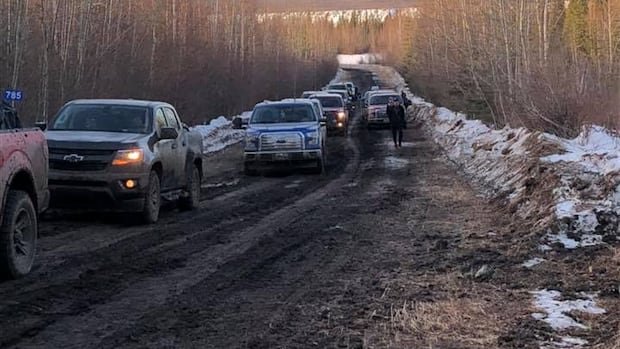
The government has announced a significant investment of $405 million in the Mackenzie Valley Highway, describing it as a project that will bring about transformative change for residents in the area. This highway, which is planned to connect the final portion of Highway 1 at Wrigley to the Dempster Highway in Inuvik, has been designated as a project of national interest. It is expected to reduce the dependency on seasonal transportation methods such as barges and winter roads, with additional benefits for national defense.
During a press conference held in Yellowknife, Federal Transport Minister Steven MacKinnon highlighted that the highway will not only facilitate mineral development and unlock economic opportunities but also significantly improve the quality of life for people residing in the region.
The funding will be utilized for various key projects, including the construction of a bridge across the Great Bear River near TulıÌt’a, the advancement of the Prohibition Creek Access Road’s second phase, as well as the preliminary engineering and design for two additional bridges spanning the Liard and Mackenzie Rivers. Additionally, the funding will aid in finalizing the environmental assessment and design for the section of the highway between Wrigley and Norman Wells.
Caroline Wawzonek, the minister responsible for strategic infrastructure, energy, and supply chains in the N.W.T., emphasized that the construction of the Great Bear River bridge will generate significant employment opportunities, urging all capable residents to participate in the construction phases. Groundwork and preparatory activities are scheduled to take place over the winter months, with construction expected to commence in early July 2027 following the selection of a contractor for the bridge.
The initiative is part of the $1 billion Arctic Infrastructure Fund announced last year, with Minister MacKinnon acknowledging that the allocated $405 million may not cover the entire project but expressing a commitment to funding the subsequent phases of the highway promptly.
The enhanced Mackenzie Valley corridor is anticipated to fortify the resilience of Canada’s northern transportation network, bolster the country’s long-term presence, security, and sovereignty in the Arctic. In addition to these strategic benefits, the investment aims to strengthen regional supply chains, facilitate year-round community resupply, improve access to health and emergency services, and provide safer and more reliable transportation for residents and Indigenous communities.

