

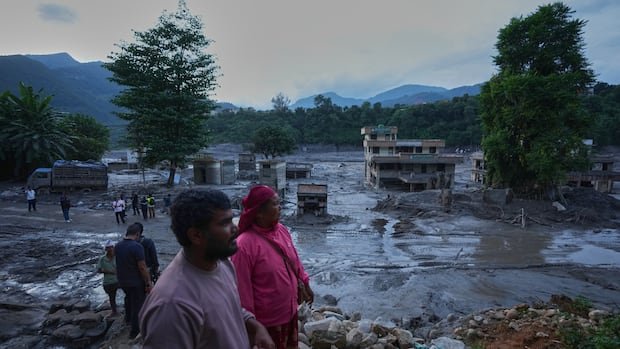
Geoscientist Jakob Steiner describes a striking scene where a massive portion of a glacier in Nepal’s Himalayas appears to have been sliced off like with a knife, plunging 1.2 km down from a 5,000-meter elevation. The resulting ice, rock, and sediment avalanche temporarily blocked the river below, forming a lake. As the lake filled with the released water, the dam eventually burst, unleashing a destructive torrent that engulfed downstream villages on both sides of the border. This calamity has led to the loss of at least 579 lives, with around 1,400 individuals still unaccounted for in Nepal, including 32 Canadian citizens and residents.
Experts have raised concerns about the formation of additional lakes post-disaster, which could potentially exacerbate the ongoing death and destruction. The region’s indigenous people have long cautioned climbers about the mountain, Langtang Lirung, referring to it as an “angry mountain,” a warning that seems to be tragically validated each year.
While some climate scientists exercise caution in directly attributing such events solely to human-induced climate change, researchers specializing in glacier hydrology and the impacts of global warming on the cryosphere emphasize that this catastrophe aligns with warnings issued for years, especially in the Himalayan region.
John Pomeroy, the director of the University of Saskatchewan’s Centre for Hydrology, notes the increasing frequency of such catastrophic events as a result of climate change eroding natural infrastructure at an alarming pace, leaving little time for human adaptation.
The tragic incident in Nepal underscores the intricate challenges posed by climate change in the Himalayan region, affecting various landscapes and communities. Global warming has significantly impacted the Himalayas, accelerating glacier melt, triggering avalanches, and causing glacier retreat. The loss of glacier coverage in the Himalayas has already reached 21% in the early 21st century, highlighting the severe consequences of rising global temperatures.
The mounting risks associated with glacial lake outburst floods (GLOFs) have been exacerbated by global warming, leading to greater ice loss and the expansion of glacial lakes. An estimated 15 million people living within 50 kilometers of these vulnerable regions are at risk, primarily in the Himalayas, the Andes, and the Alps.
Experts stress the critical situation faced by mountain communities, particularly in Nepal, where proximity to melting glacier waters puts them at heightened risk. The devastation caused by these events can have long-lasting effects, disrupting water sources for drinking and irrigation and necessitating prompt action to mitigate future disasters.
Geoscientist Jakob Steiner underscores the preventable nature of the Nepal disaster, emphasizing the necessity for proactive decision-making and preparedness. While acknowledging the role of climate change, Steiner emphasizes the importance of early warning systems and cooperation among stakeholders to avert such tragedies in the future.
Efforts to combat climate change and limit further global warming are crucial, as emphasized by John Pomeroy of the University of Saskatchewan. He urges global action to reduce greenhouse gas emissions, emphasizing the need for a collective effort to address the root causes of climate change rather than relying solely on adaptation measures.
In conclusion, the catastrophic glacier collapse in Nepal serves as a stark reminder of the urgent need for climate action to safeguard vulnerable regions and communities from the escalating impacts of global warming.

