

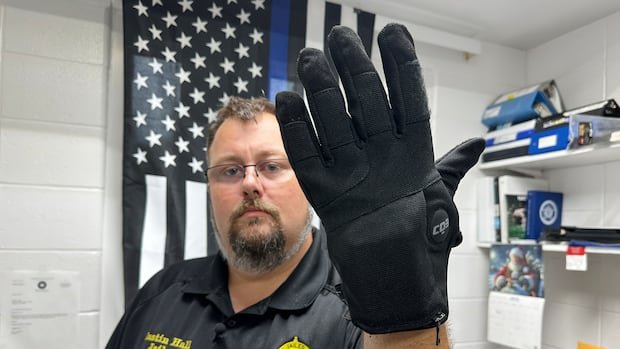
U.S. Immigration and Customs Enforcement (ICE) has approved a $16.7 million contract to procure 6,000 pairs of gloves capable of delivering painful electric shocks. The agency stated that these gloves would be used by officers to manage detainees and demonstrators who resist.
Despite objections from civil rights advocates and Democratic lawmakers, ICE proceeded with the purchase. The agency’s plan came to light when it released a notice detailing its intention to buy thousands of “conductive distraction and de-escalation devices” for its officers and investigators.
In a notification published in a federal database, ICE revealed that it had entered into a no-bid contract with Compliant Technologies LLC, a Kentucky-based company that manufactures these gloves. The contract involves obtaining 6,000 of these devices along with accompanying equipment and services within the next six months.
Critics have raised concerns about ICE officers’ use of force, citing minimal oversight or accountability, particularly during President Donald Trump’s immigration enforcement crackdown. Incidents involving ICE and Customs and Border Protection (CBP) have resulted in fatalities, including encounters with protesters.
Following the fatal shootings of American citizens Renee Good and Alex Pretti earlier this year, ICE has scaled back its high-profile deportation operations in major U.S. cities in response to public backlash. Despite recording a peak monthly arrest figure in July, ICE’s data revealed that more than half of those arrested had no prior convictions or were not facing criminal charges.
ICE issued the notice shortly after a group of U.S. senators, led by Democrat Catherine Cortez Masto of Nevada, urged the agency to halt its procurement of the electric shock gloves. In a letter to ICE’s acting director, Cortez Masto and 15 Democratic colleagues questioned the necessity of these devices given recent misuse of force by ICE officers across various locations in the country.
The gloves appear as standard patrol gloves until activated to deliver an electric shock when pressed. ICE specified that these devices would be deployed in high-stress scenarios such as arrests, detainee transportation, and managing civil disturbances near detention facilities.
The agency emphasized that the shocks would aid in controlling inmates, prevent aggression, and assist in crowd management, reducing the need for more severe measures like firearms. Although ICE mentioned using these gloves in line with approved policies, training, and accountability standards, specific details were not provided.
Cortez Masto and fellow senators expressed concerns in their letter about the risks associated with deploying such a device during civil arrests, particularly without clear restrictions, adequate training, and comprehensive oversight.
In response to critics, the Department of Homeland Security, ICE’s parent agency, defended the purchase, condemning the opposition as an attempt to undermine and endanger ICE officers. This contract is the latest in a series of no-bid contracts awarded by the Trump administration, a practice that has drawn scrutiny from Democrats.
The purchase of the electric shock gloves adds to the list of controversial contracts issued by the administration, including contracts for airplanes, detention facilities, and renovations of public spaces like the Lincoln Memorial Reflecting Pool.

