

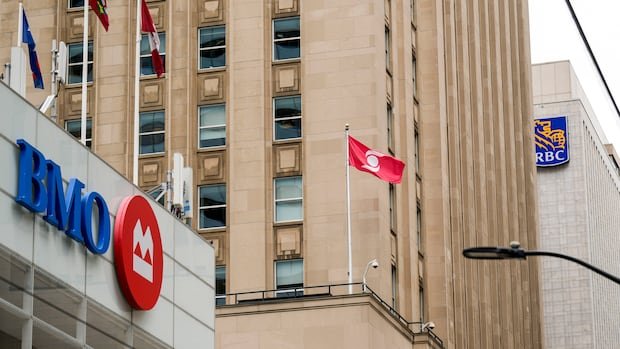
Canada’s major banks are shielded from direct tariff expenses, but their extensive portfolios of consumer and business loans valued in the trillions are at risk due to the economic repercussions of the ongoing trade dispute with the United States. Despite this, top executives remain optimistic as they present their third-quarter financial results in the midst of escalating trade tensions.
Bank of Montreal and Scotiabank were the first to release their earnings this week, with National Bank following suit and the Royal Bank of Canada, Toronto-Dominion Bank, and CIBC scheduled to announce theirs shortly. Scotiabank’s CEO, Scott Thomson, expressed confidence during a conference call with analysts, highlighting positive aspects of Canada’s economy amidst the trade uncertainties.
Although U.S. President Donald Trump recently imposed significant tariffs on Canadian goods, affecting a small fraction of Scotiabank’s loan portfolio directly, the banks face broader risks from macroeconomic instability, particularly in consumer lending sectors such as mortgages, auto loans, and credit cards.
Thomson and Bank of Montreal’s CEO, Darryl White, emphasized that the current trade environment presents opportunities for Canada to address internal trade barriers and enhance economic diversification. White also noted the benefits of the “America First” policy for Canada’s economy, pointing out the potential advantages of North American collaboration.
Despite the trade tensions, shares of Canada’s major banks are trading near record highs on the Toronto Stock Exchange, with Scotiabank experiencing a notable increase in stock value. The executives’ outlook remains positive as they navigate the challenges posed by the trade war.
The ongoing trade dispute has not dented investor confidence in the banking sector, as evidenced by the strong performance of Canadian bank stocks in the market.

