

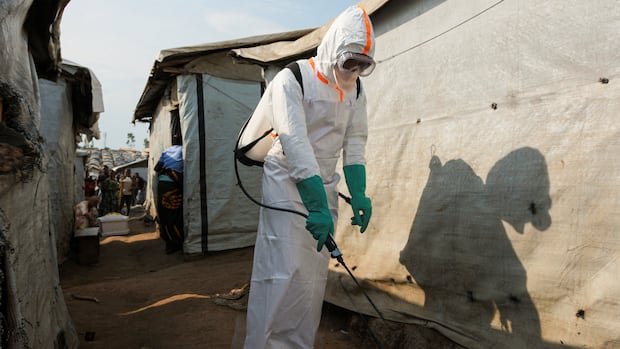
The Ebola crisis in the Democratic Republic of Congo has escalated to become the most fatal in the nation’s history, with a rising number of confirmed cases causing global concern. The public health ministry of the D.R.C. reported a total of 2,378 deaths by August 16, marking the second-largest Ebola outbreak ever recorded. World Health Organization (WHO) Director-General Tedros Adhanom Ghebreyesus emphasized the unprecedented speed at which the outbreak is spreading, stating that the epidemic is still far from being contained.
Ebola is a severe disease associated with orthoebolaviruses, with various strains affecting humans, including Zaire, Sudan, Taï Forest, and Bundibugyo. The current outbreak in the D.R.C. involves the Bundibugyo strain, marking the 17th outbreak in the country’s history. The transmission of Ebola occurs through close contact with infected animals like fruit bats or chimpanzees, and then spreads between humans through contact with bodily fluids.
The outbreak, declared in May, has primarily affected the eastern region of the D.R.C., near the borders with South Sudan and Uganda. The first suspected case was a health worker who displayed symptoms in late April and subsequently passed away in Bunia, Ituri province. The rapid spread of Ebola in this outbreak surpasses previous incidents, with over 5,000 cases reported in the D.R.C. by August 16, mainly concentrated in Ituri province with a high case fatality rate.
Several factors complicate the response to the outbreak, including the absence of a vaccine or specific treatment for the Bundibugyo strain, ongoing armed conflicts, mass displacement, and limited resources. The lack of trust in government and healthcare efforts by residents further hampers containment efforts, as people remain fearful of seeking medical assistance. Efforts to combat the outbreak involve testing, contact tracing, safe burials, and isolating patients, with a focus on deploying more healthcare workers and engaging local communities to enhance response measures.
Dr. Joanne Liu, a prominent figure in previous Ebola responses, emphasizes the importance of testing, contact tracing, and supporting frontline healthcare workers to gain control over the outbreak. The WHO is intensifying its response efforts by deploying additional epidemiologists and expanding treatment facilities. Financial support from countries like Canada is crucial to bolstering on-ground response teams and preventing the further spread of Ebola beyond the affected region.

