

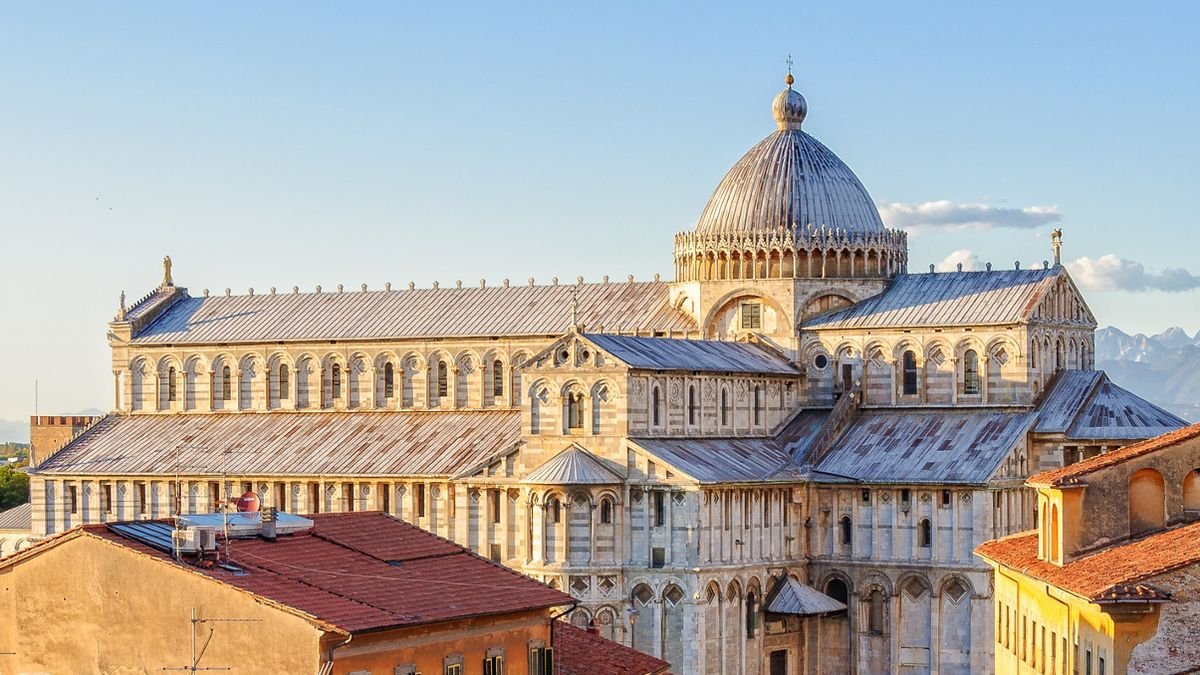
A seismic event measuring 4.3 on the Richter scale jolted the Tuscany region of Italy, with its epicenter a mere four miles from the historic city of Pisa. The earthquake struck around 10:15 am local time, affecting northern Tuscany, including the areas of Lucca, Pisa, and Massa-Carrara.
According to Italy’s National Institute of Geophysics and Volcanology (INGV), the quake originated near San Piero a Grado, approximately seven kilometers from Pisa, at a shallow depth of about eight kilometers. The shallowness of the quake led to its widespread impact across northern Tuscany.
Eugenio Giani, the regional governor of Tuscany, confirmed on social media that assessments were ongoing through the regional emergency system. He stated that the earthquake was strongly felt across northern Tuscany.
Following the initial tremor, a second earthquake of 3.2 magnitude occurred at 1:04 pm, with its epicenter located around five kilometers from Pisa at a depth of 11 kilometers, as reported by the Italian National Institute of Geophysics and Volcanology (INGV).
Bernard Dika, the undersecretary to the presidency of Tuscany, reported on social media that numerous emergency calls were made after the first earthquake hit Pisa. Precautionary evacuations were underway, and while no injuries were reported, some evacuations were conducted in the area.
Local newspaper Corriere Fiorentino mentioned that three families were evacuated from a building in San Giuliano Terme, near Pisa, due to structural instability caused by the earthquake, requiring further inspections by firefighters.
Fortunately, no injuries or significant building damage were recorded. The earthquake prompted residents in Pisa to leave their homes and gather in the streets as a safety measure. Court hearings at the local courthouse were suspended, and the city hall was evacuated temporarily, but residents and employees were allowed back after inspections.
Rail services on various lines from Pisa were temporarily halted for around four hours for infrastructure checks, as per Corriere Fiorentino. Notably, iconic landmarks like the Leaning Tower of Pisa and museums in Piazza dei Miracoli were unaffected and remain open to visitors.