

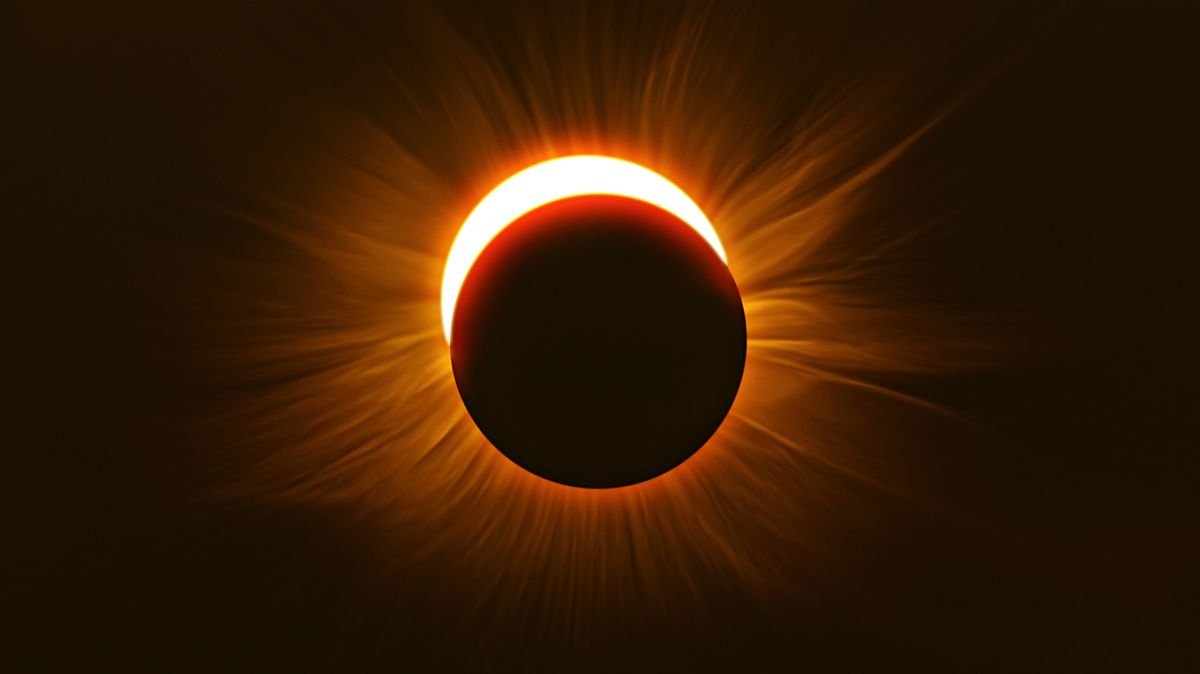
A remarkable solar event is approaching the UK, set to be the most striking solar eclipse visible since 1999. On August 12, the Moon will move directly between the Sun and Earth, casting a shadow that will partially or completely block the Sun’s light.
In various parts of Europe, including the UK and Ireland, skywatchers can anticipate a captivating partial solar eclipse, with approximately 90% of the Sun obscured by the Moon in many areas. Concurrently, a total solar eclipse, where the Moon entirely covers the Sun, will be visible along a narrow path spanning Greenland, Iceland, Spain, northern Russia, and a small section of northern Portugal. This marks mainland Spain’s first total solar eclipse in over a century.
The UK and Ireland are poised to witness their most profound solar eclipse since August 11, 1999, when a total eclipse was visible across most of Cornwall and Devon. Solar eclipses occur when the Moon aligns directly between the Sun and Earth, casting a shadow on our planet. Due to the Moon’s smaller size compared to Earth, solar eclipses are only visible from specific regions on Earth.
Typically, there are between two and five solar eclipses annually, with a total solar eclipse occurring approximately every 18 months worldwide. This upcoming total solar eclipse will be observable from parts of Greenland, Iceland, northern Russia, Spain, and northeast Portugal, while a partial solar eclipse will be visible across Europe, parts of Africa, North America, and various oceanic regions.
The eclipse timings will vary depending on the location. In cities like London, Bristol, and Cardiff, the eclipse is projected to commence around 6:17 pm, peak at approximately 7:12 pm, and conclude by 8:06 pm. Viewers in London can expect about 90% of the Sun to be obscured by the Moon.
For the best eclipse viewing, the Royal Observatory Greenwich recommends heading to the southwest regions of the UK. Cornwall and Pembrokeshire in Wales are expected to experience around 95% and 94% coverage, respectively. Additionally, those in the southwest tip of Ireland are in for a spectacle, with nearly 97.5% of the Sun set to be obscured by the Moon.
While millions will witness the eclipse, regions like South America, southern Africa, Australia, New Zealand, and much of Asia will miss out due to nighttime hours or the Sun being below the horizon. However, online live streams by agencies like the European Space Agency and NASA will provide opportunities to experience the event remotely.
It is crucial to view the solar eclipse safely, as ordinary sunglasses do not offer sufficient protection. The UK Health Security Agency advises using specially designed eclipse viewers or indirect viewing methods to prevent eye damage. Eclipse glasses should meet international safety standards and be free from defects, while a simple pinhole projector can also be used to view the eclipse indirectly.

