

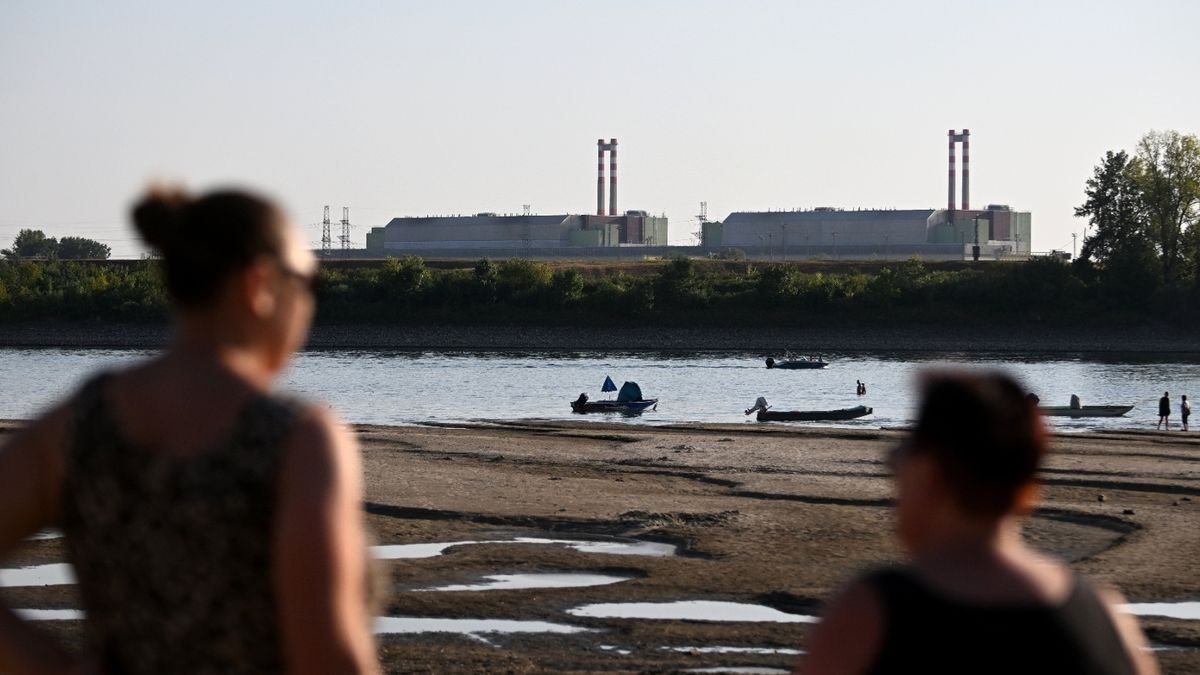
Hungary’s singular nuclear power facility will close for the first time in its history due to exceptionally low water levels in the renowned Danube River caused by a severe drought. The country faces potential blackouts as Prime Minister Peter Magyar warned of critical challenges ahead. The Paks nuclear plant, located south of Budapest, heavily dependent on Danube water for cooling, is currently operating at reduced capacity, jeopardizing half of Hungary’s power supply.
The aging plant, functional for 44 years, recently operated at less than half its standard output, prompting concerns of an imminent energy crisis. Magyar emphasized the necessity of cautious power reduction measures to avoid risks to the public and environment. With the region facing a prolonged drought and extreme heat, water reserves are not expected to replenish soon, exacerbating the energy supply crisis.
To mitigate the energy shortfall, the Hungarian government has urged citizens and businesses to lower energy consumption voluntarily, especially during peak hours. Water usage restrictions have also been enforced in numerous areas, including Budapest. The situation has prompted discussions about potential financial losses and energy import costs, with estimates ranging from 100bn to 200bn forints.
The European Commission is closely monitoring the developments in Hungary and might convene an emergency meeting of its Electricity Coordination Group. The impact of the Danube water crisis has extended to other European countries, such as Romania, where measures like controlled rock blasting to redirect water flow have been implemented to safeguard nuclear power plants from the effects of the ongoing heatwave.

