

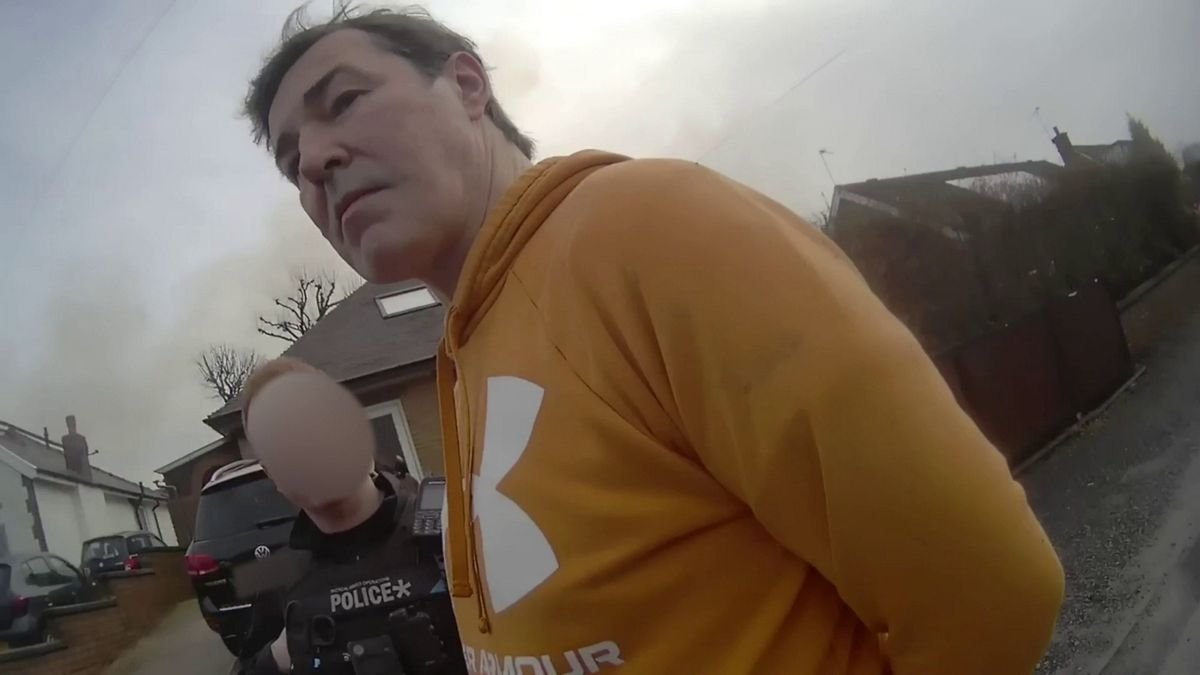
A court was informed that a man destroyed his childhood home in an explosion due to a mistaken belief that he had been excluded from inheriting the property. Darren Davies, aged 55, intentionally set fire to the £260,000 four-bedroom bungalow in Hambleton, Lancashire, where he resided with his brother, Craig, following their parents’ passing in 2024. Witnesses reported a loud bang around 9:50 am on March 27 when the property erupted in flames and thick black smoke.
Despite severe damage to the bungalow, with the roof collapsing into the rooms below, Davies emerged unharmed and expressed to a passerby that if he couldn’t have the house, nobody would. He also mentioned contemplating suicide to neighbors, police, and paramedics present at the scene. Fortunately, firefighters contained the blaze before it could spread to neighboring properties.
Investigations revealed the placement of three gas cylinders in different areas of the house, along with petrol in the loft and a lit candle. The court determined that the fire was ignited by a naked flame on flammable materials, with an accelerant used to intensify the blaze. Davies received a prison sentence of four years and four months for recklessly endangering lives by committing arson.
Craig Davies, in a victim impact statement, clarified that his parents’ will granted equal ownership of the bungalow to him and his brother. He recounted Darren’s unfounded belief in a secret will favoring himself and the strain it caused in their relationship. Craig learned about the destruction of his home through a friend’s message and expressed deep sorrow upon witnessing the devastation.
The court was informed of the irreplaceable loss of cherished possessions, including diaries, family photographs, and jewelry, in the fire. Craig Davies sought compensation for his share of the property and other losses, emphasizing the community’s support amid the tragedy. Legal complexities related to the estate probate delayed immediate resolution of the compensation claim.
Davies’ defense highlighted his mental health challenges, including bipolar disorder, depression, anxiety, and autism spectrum disorder. A psychiatric evaluation stated that he was mentally unstable during the incident, driven by an autism-related crisis. In a letter to the judge, Davies apologized for his actions and expressed remorse towards his family, neighbors, and the village.
The defense noted Davies’ progress in custody with psychiatric treatment and medication, indicating hope for his rehabilitation post-release. Despite the severity of the case, the judge acknowledged Davies’ guilty plea and the impact of his mental disorder on his actions, leading to a reduced level of responsibility. Davies received a sentence of serving half in custody and the rest on license.
Following the sentencing, the Crown Prosecution Service expressed sympathy for Davies’s brother and family as they coped with the aftermath of the incident. The lasting impact on the family, including significant personal and sentimental losses, was highlighted, underscoring the community’s crucial role in providing support during the trying times.

