

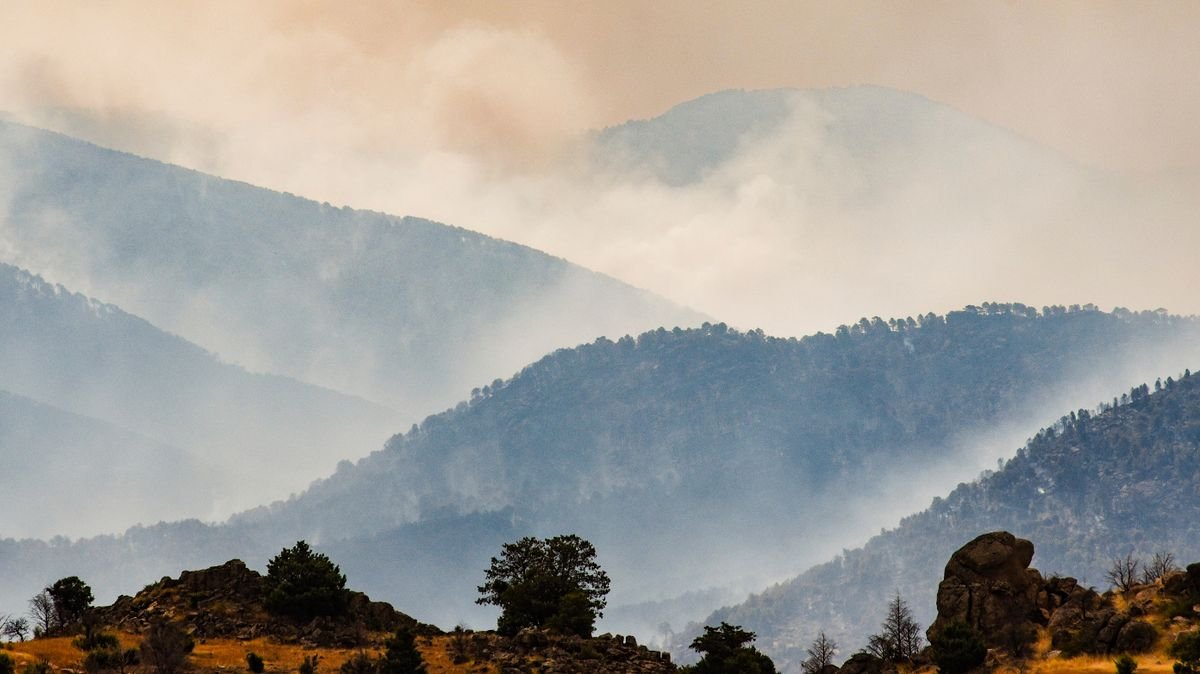
A construction worker has been arrested for allegedly igniting the largest wildfire in Spain’s history using a prohibited construction tool. The massive fire started near Navaluenga, Ávila, on July 22, while two other wildfires broke out in Madrid on the same day. Concerns arose that the fires might merge, but eventually, the Madrid fires combined.
The man, whose identity remains undisclosed, could face five to 10 years in prison if proven guilty of causing the fire due to negligence. According to firefighters, the man was using a hydraulic hammer on his excavator to crush rocks, leading to sparks igniting the dry vegetation.
The accused worker denied operating the machine, claiming he had gone to the site only to retrieve it. Authorities stated that the work was unauthorized, and the excavator lacked the necessary fire-suppression equipment. The use of such machinery is forbidden during Spain’s summer months due to the elevated risk of wildfires amid summer heatwaves and emergency situations.
The wildfire spread rapidly, scorching around 193 square miles and displacing approximately 90,000 people from their homes, making it one of Spain’s most destructive wildfires. Minister Sara Aagesen reported that the fires affected about 77,000 hectares across Spain, with Ávila accounting for 50,000 hectares, marking it as the largest wildfire in recent Spanish history.
Regional President Alfonso Fernández Mañueco attributed the fire to negligence and declared that the Castilla y León government would prosecute the individual responsible.
Despite efforts to stabilize the major blaze affecting Ávila and Madrid, Interior Minister Fernando Grande-Marlaska warned of challenging conditions ahead due to strong winds and high temperatures. Evacuation orders were partially lifted in some areas, although restrictions remained in the most affected zones.
Authorities also alerted residents of a separate wildfire in Zamora province, prompting evacuations and shelter-in-place orders for six towns and about 1,000 individuals. High temperatures nearing 40°C were forecasted in parts of Spain, with the heatwave expected to persist until at least Sunday.
The state meteorological agency Aemet cautioned that the fire risk level would escalate to extreme levels, posing challenges to firefighting operations.

