

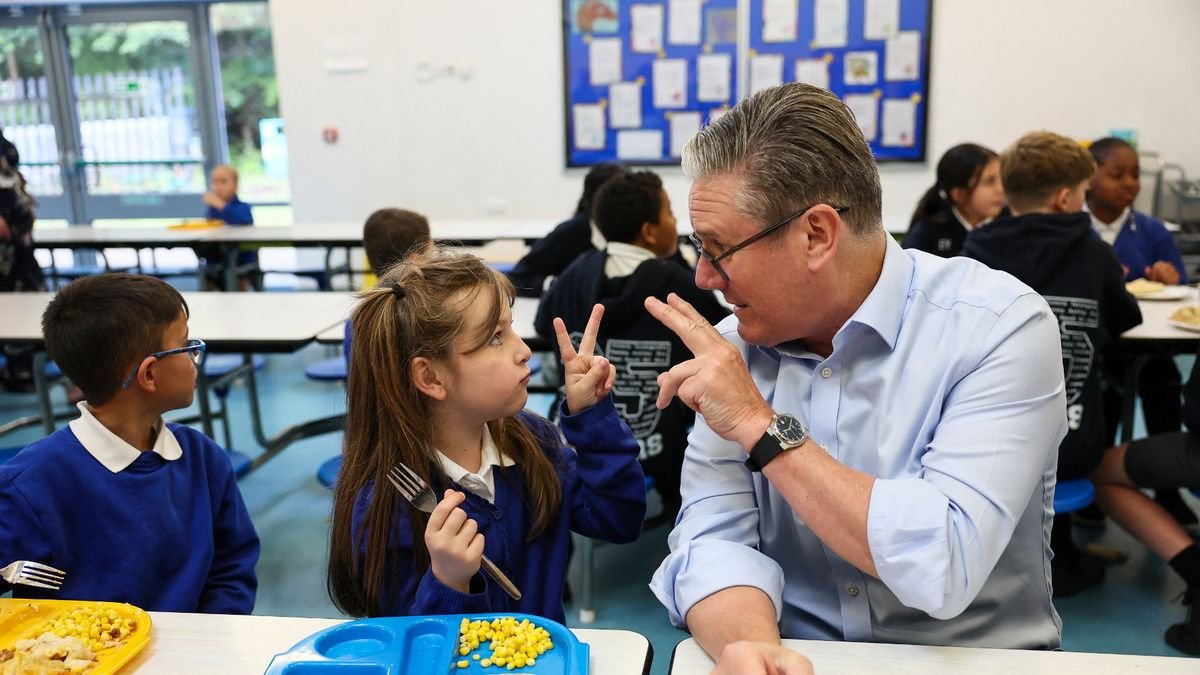
A recent survey revealed that a significant majority of individuals in England, amounting to around two-thirds, are in favor of expanding the provision of free school meals to all primary school children. The research conducted by More in Common and the National Education Union highlighted that this initiative garnered strong support from various voter groups, including 83% of Labour loyalists, 84% of those who have shifted towards left-wing parties, and 67% of individuals who have transitioned to right-wing parties.
This growing public endorsement places pressure on Andy Burnham, the anticipated future Prime Minister, to surpass the efforts of Keir Starmer in broadening access to free school meals. The current plan, announced by the Prime Minister, entails making all children in families receiving universal credit eligible for complimentary hot lunches starting this September, benefiting approximately half a million children.
The Mirror has actively advocated for the extension of free school meals to all primary school children. The newspaper welcomed Starmer’s initial expansion of the program, which was first introduced last summer.
The survey also indicated that support for universal free school meals was particularly strong among parents, with 82% expressing approval. Additionally, a majority of individuals without children (63%) and those who consider themselves financially stable (66%) also voiced their support for this policy.
The primary motivation behind backing this initiative, as highlighted by the survey, is the aim to address child poverty, with 37% of respondents citing this as the main reason. Other key drivers of support include reducing the financial burden on families (33%) and ensuring equal treatment for all children (33%).
Furthermore, Education Secretary Bridget Phillipson recently advocated for a “universal early years” offering, emphasizing the economic and social benefits of providing enhanced support for parents. This move is seen as a strategic approach to combat youth unemployment and stimulate community growth.
Alex Newton, deputy director at More in Common, emphasized the potential benefits of implementing universal free school meals for primary school pupils. Newton pointed out that this policy enjoys broad public support, spanning across different political affiliations and uniting various segments of the population. Additionally, this initiative not only demonstrates a commitment to supporting working families but also serves as a crucial step in addressing child poverty.
The Department for Education reaffirmed its commitment to the cause, highlighting the significant impact of providing free school meals to all children from households receiving Universal Credit. This measure is expected to uplift 100,000 children out of poverty, alongside other supportive initiatives such as removing the two-child limit and expanding childcare services.
The survey, conducted by More in Common, polled 2,011 adults in England between April 10-13 and 2,993 adults between June 19-22.

